
Belgium · Flanders — A travel guide
Bruges
One day and a night in Bruges — medieval squares, quiet courtyards, canals at blue hour and the city after the day-trippers leave.
6 min read
Introduction
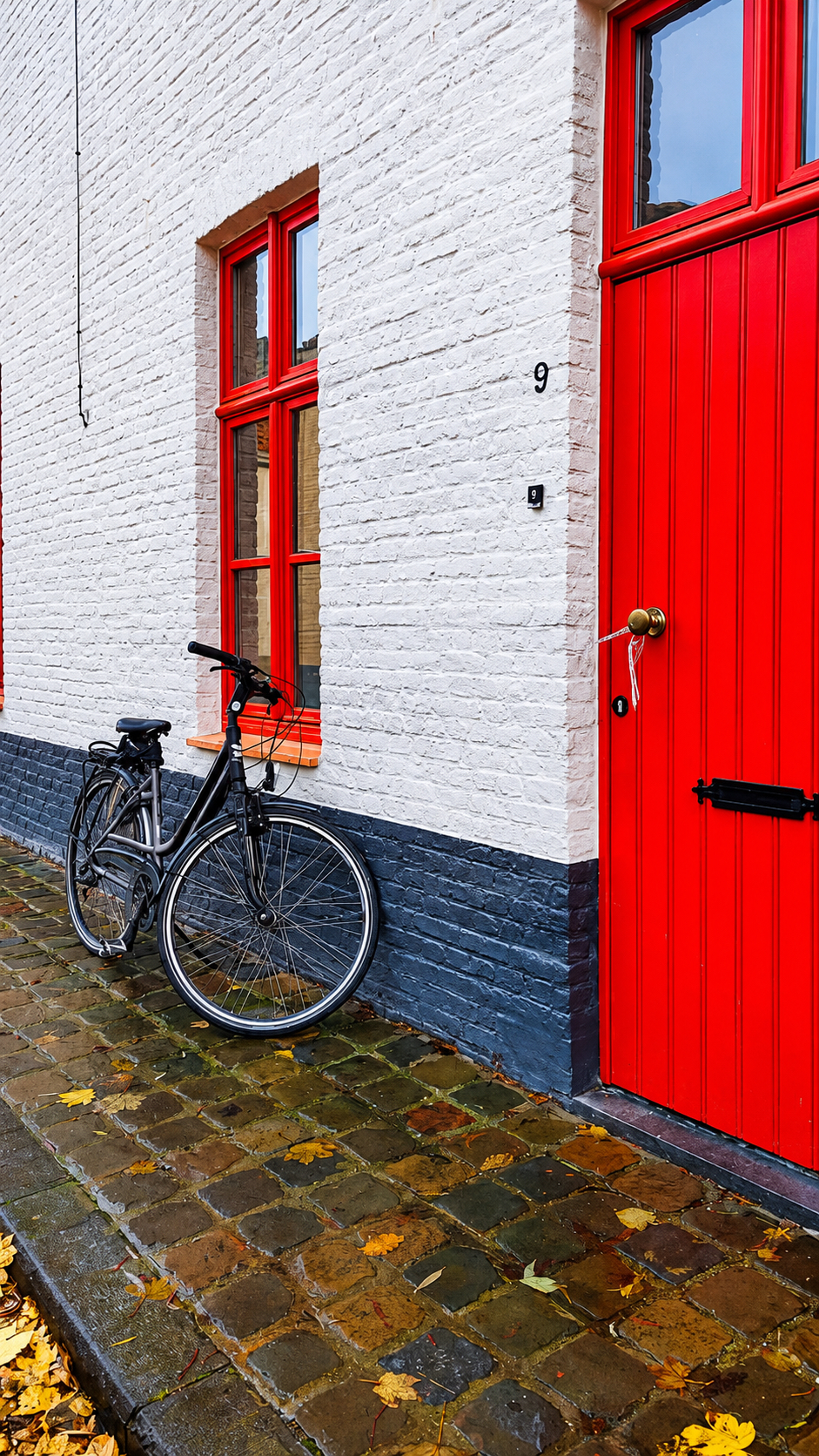
Bruges is compact enough to explore on foot, but it makes more sense as an overnight stay than a rushed day trip. The centre is a dense sequence of stepped gables, stone bridges, church towers and canals; early in the morning and after dark, the same streets feel very different from the busy hours in between.
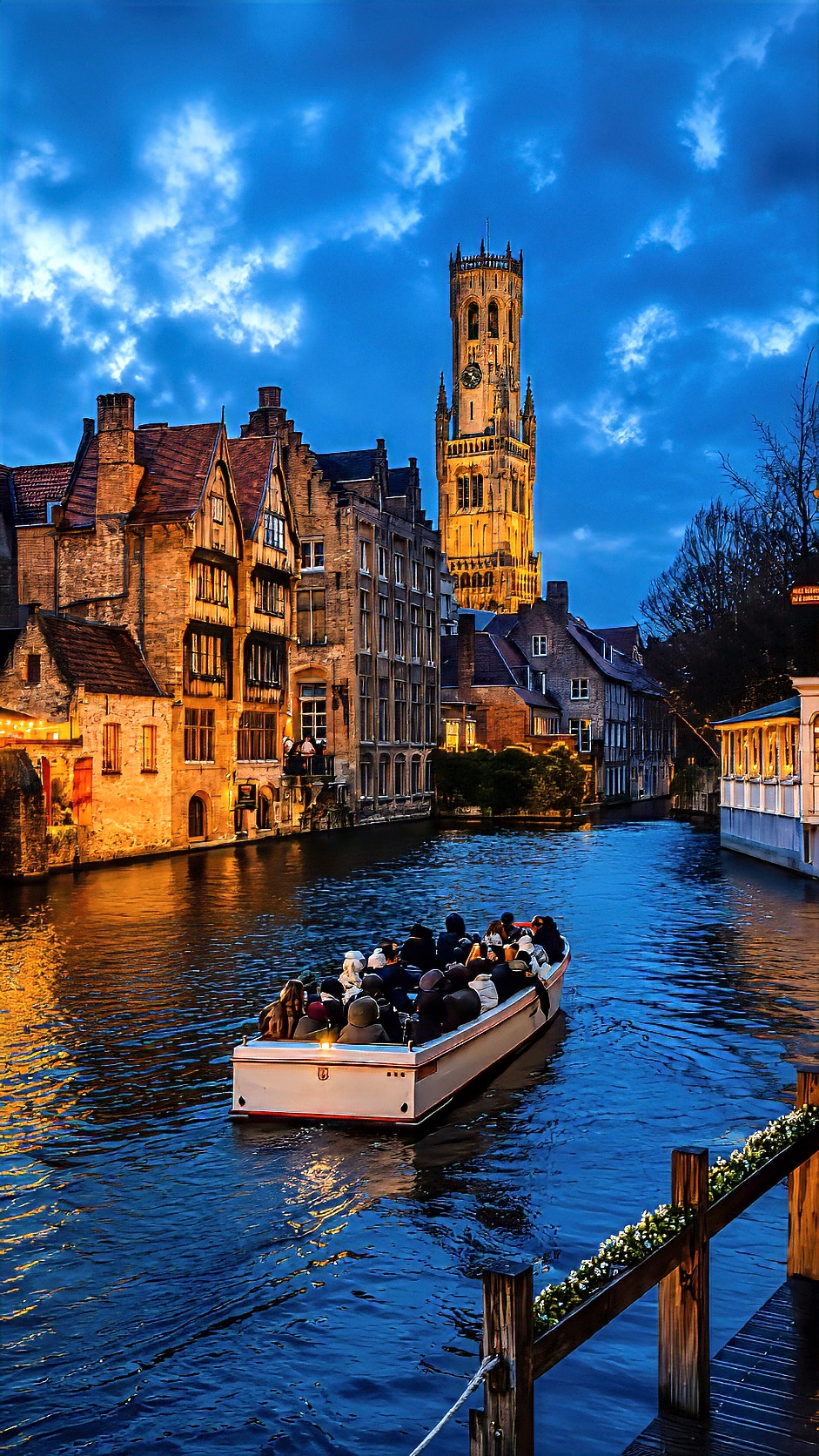
We came in December and treated it as a slow winter escape: cold walks along the water, waffles and mulled wine in the centre, and blue hour around Rozenhoedkaai as the lights began to reflect in the canal. Staying overnight also gave us the quietest version of the city. One morning we reached its most photographed view before the first groups arrived, with mist above the water and almost nobody else around.
This is the route we would use for one day and a night, with a few additions if you stay longer.
Bruges
At a glance
Time needed One full day and one night; add a second day for museums and the quieter east.
Best time Late spring and early autumn for milder weather; December for lights and winter atmosphere.
Getting there Direct trains connect Bruges with Brussels; Brussels-Midi to Brugge takes about one hour.
Getting around Walk. The historic centre is compact and largely flat.
Book ahead The Belfry, a special dinner and accommodation at weekends or during the festive season.
The route
One day and a night in Bruges
Markt · Burg · Rozenhoedkaai · Beguinage · Minnewater · Canals after dark
Begin in the Markt
Start in Bruges' main square before the busiest part of the day. The Markt is framed by colourful guild houses, the Provincial Court and the Belfry, the 83-metre tower that has marked the city's skyline for centuries.
Climbing the Belfry means 366 steps, but it is the clearest way to understand the compact city from above. Entry is timed and capacity is limited, so reserve a slot if the tower matters to you rather than assuming you can walk straight in.
- Allow 60–90 minutes for the Belfry
- Best Morning
- Know The staircase is steep and narrow; opening and ticket information can change
- Official Belfry · Visit Bruges ↗
Cross to Burg and the Basilica
Walk through Breidelstraat to Burg, where the Gothic City Hall faces the Basilica of the Holy Blood. The basilica's two chapels feel completely different: a restrained Romanesque lower chapel and a more ornate upper chapel containing the venerated relic.
This is a short but worthwhile stop. Check visiting times around religious services and enter quietly; the treasury is separate from the chapels.
- Allow 30–45 minutes
- Best Late morning
- Know Access can be affected by services and ceremonies
- Official Basilica · Visit Bruges ↗
Follow the canals to Rozenhoedkaai
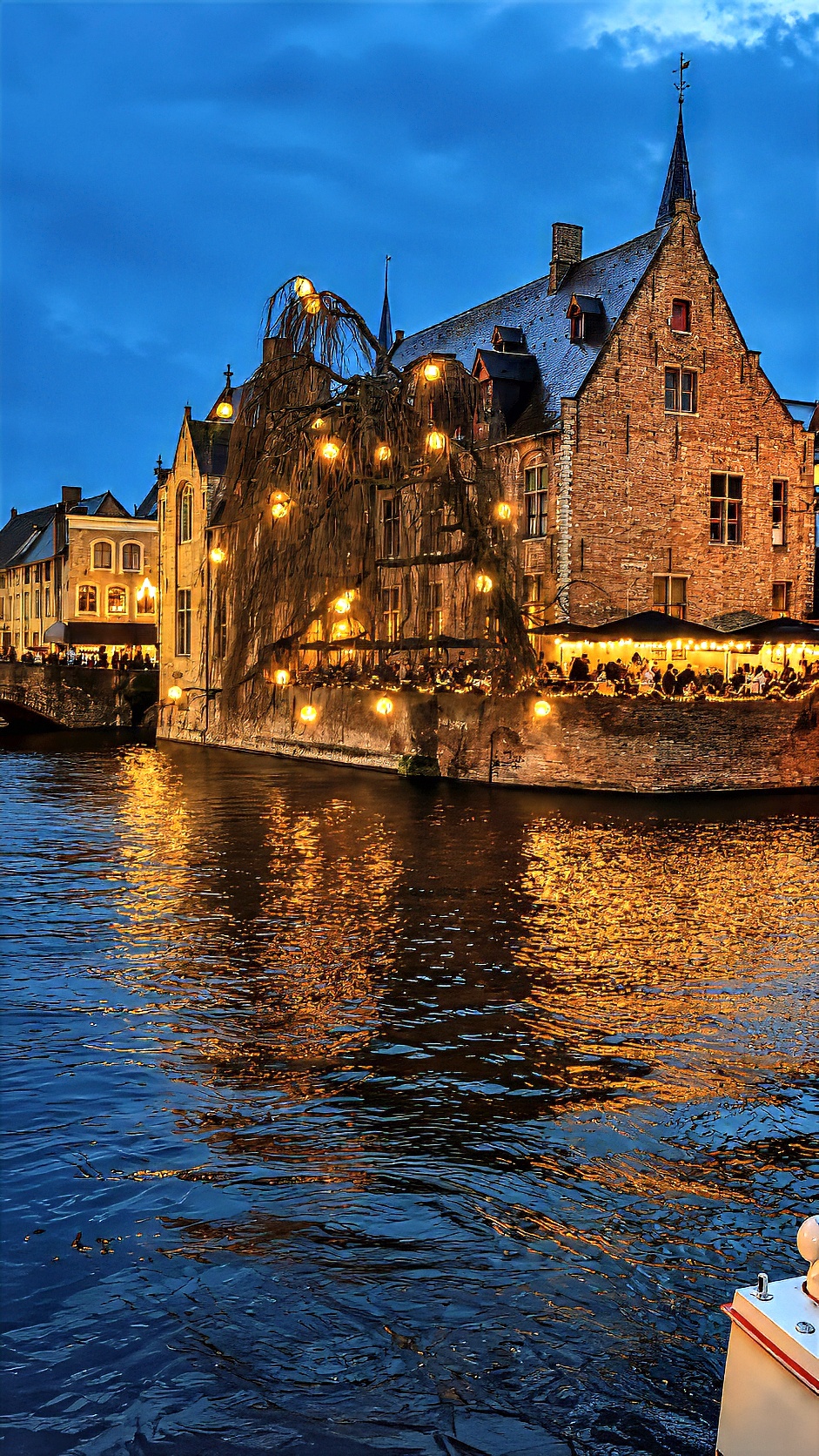
Continue through the lanes around Huidenvettersplein and follow the water towards Rozenhoedkaai. This is the classic Bruges view: old façades gathered around a bend in the canal, with the Belfry rising behind them. It is beautiful in daylight, but the scene becomes stronger around blue hour when the buildings illuminate and the water turns dark.
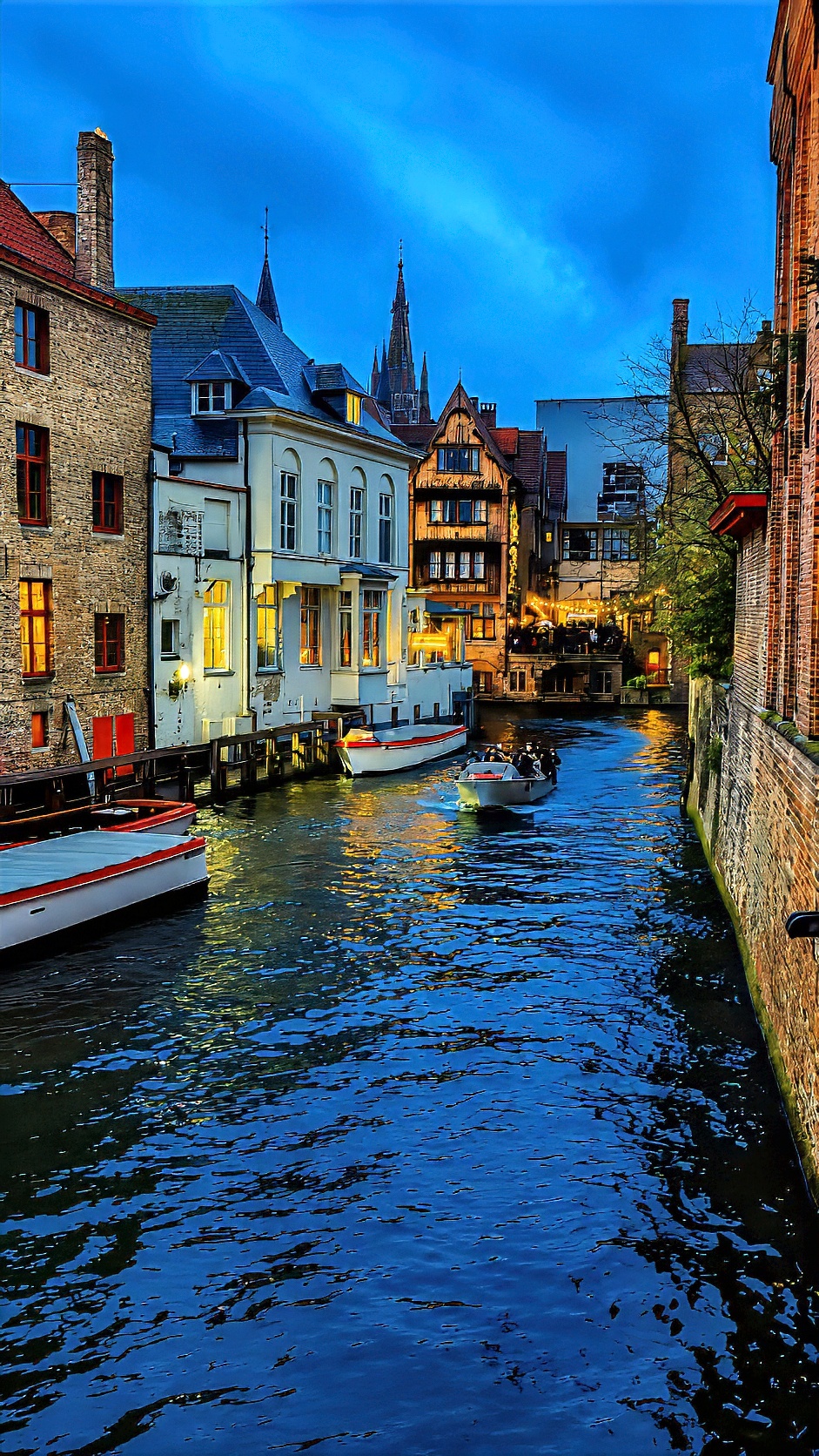
If boats are running, a half-hour canal trip reveals courtyards, bridges and façades that cannot all be seen from the street. Individual tickets are sold at the landing stages rather than online. Regular operation is guaranteed from early March to mid-November; winter departures depend on weather and demand.
- Allow 60–90 minutes for the walk; add 30 minutes for the boat
- Best Walk in daylight, then return for blue hour
- Know The licensed companies follow the same central route and official fare
- Official Bruges by boat · Visit Bruges ↗
Continue to the Beguinage and Minnewater
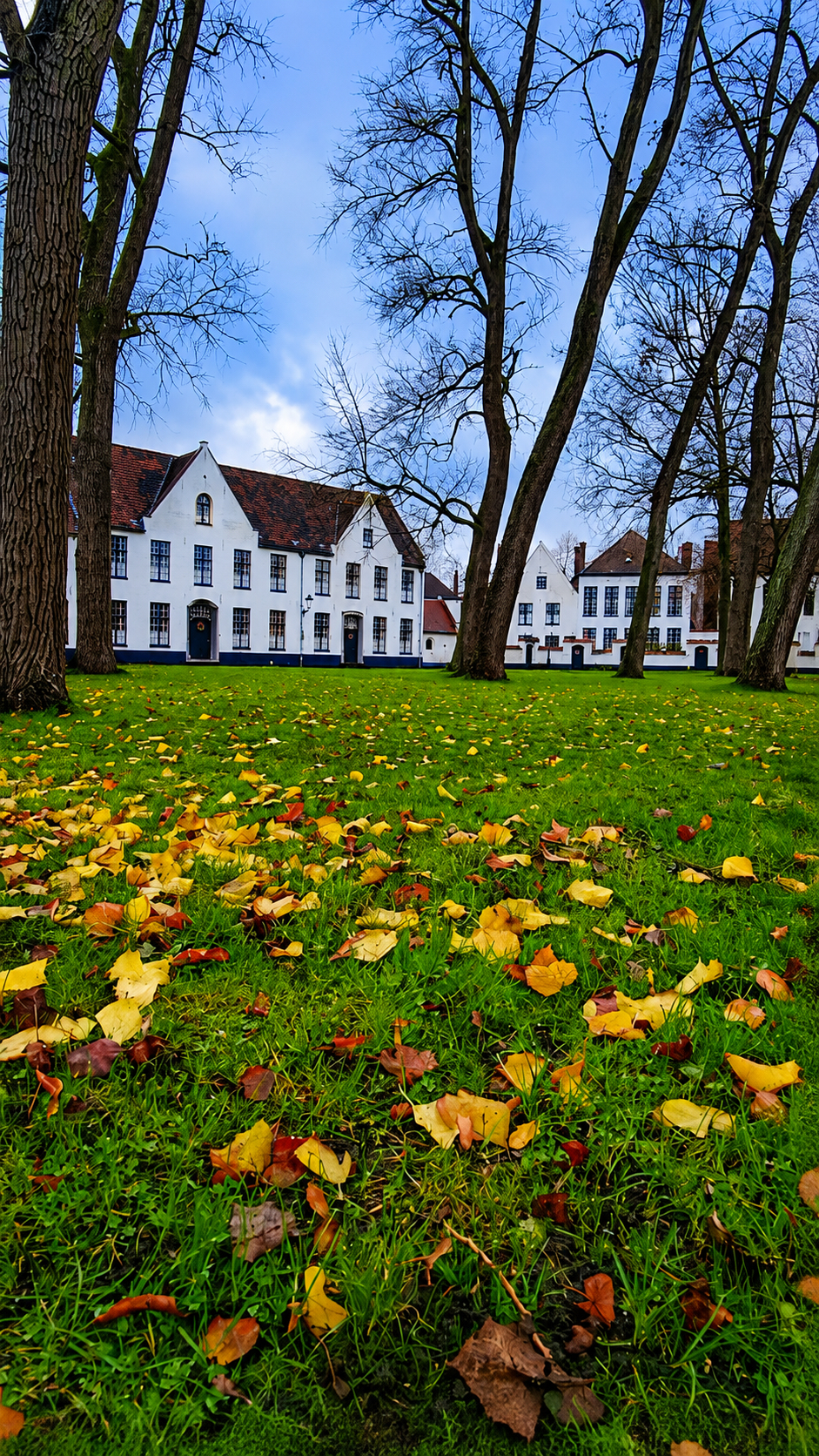
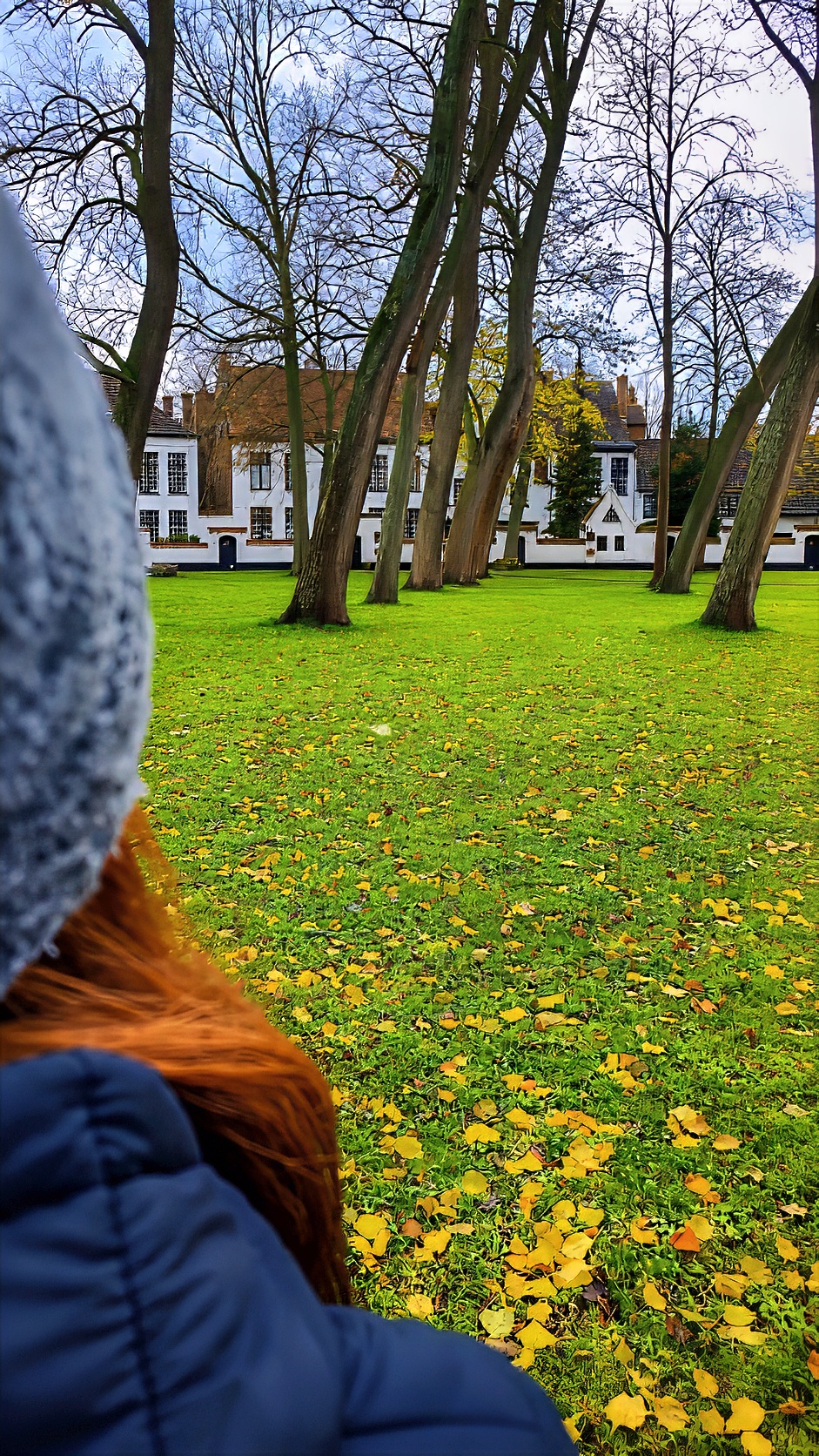
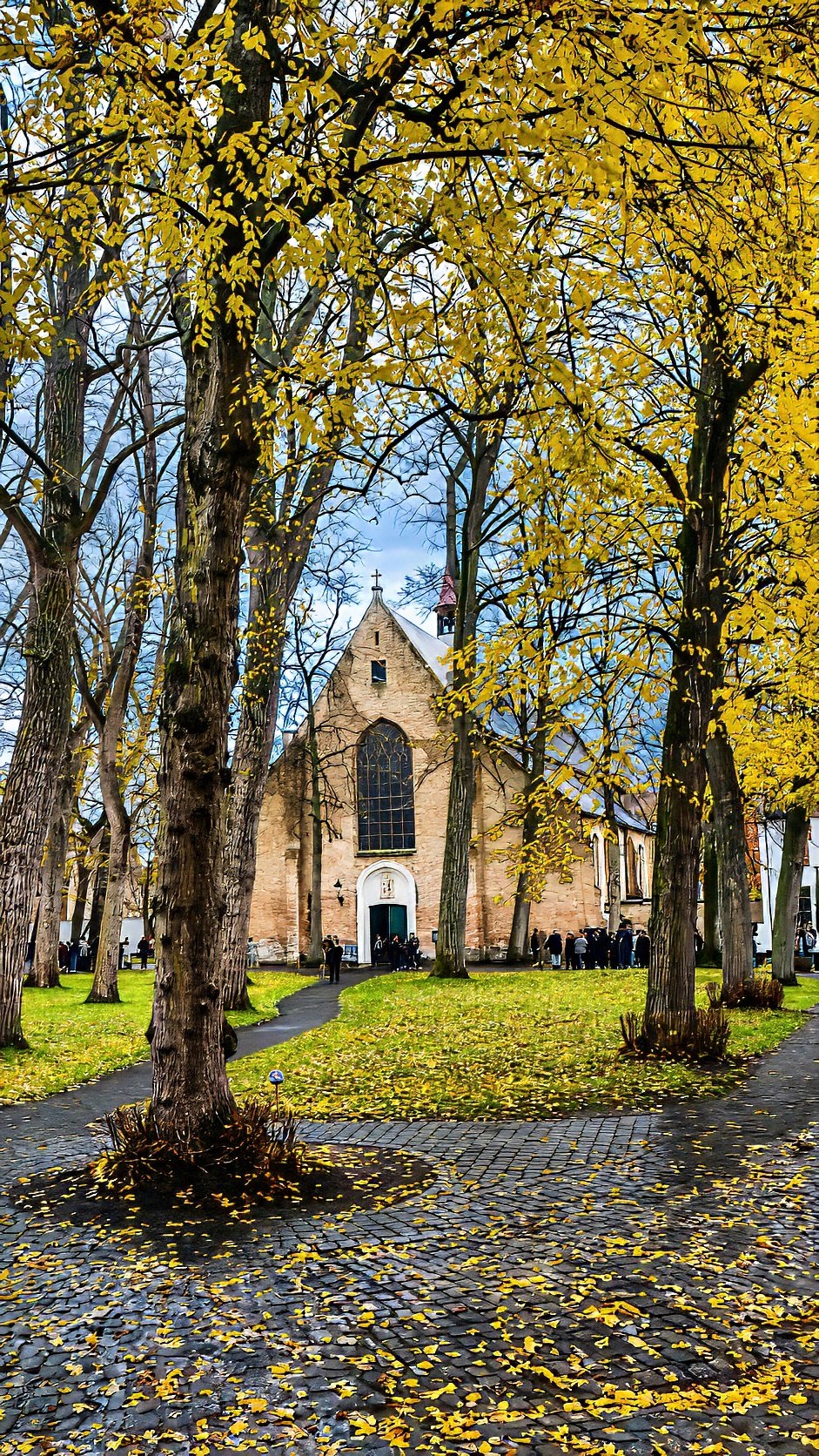
Walk south through the Church of Our Lady quarter and across to Minnewater, then enter the Princely Beguinage Ten Wijngaarde. Its white houses surround a broad garden that feels unexpectedly separate from the streets outside. The community dates to the 13th century and forms part of the UNESCO-listed Flemish beguinages; the gates still close at night.
Move quietly and treat it as a lived religious precinct rather than a photo set. The courtyard and church do not need long, but combined with Minnewater they give the route its calmest stretch.
- Allow 45–60 minutes including Minnewater
- Best Late afternoon, or early morning if you have slept in Bruges
- Know The courtyard is free to enter; respect the silence and closing times
- Official Beguinage · Visit Bruges ↗
Return to the canals after dark
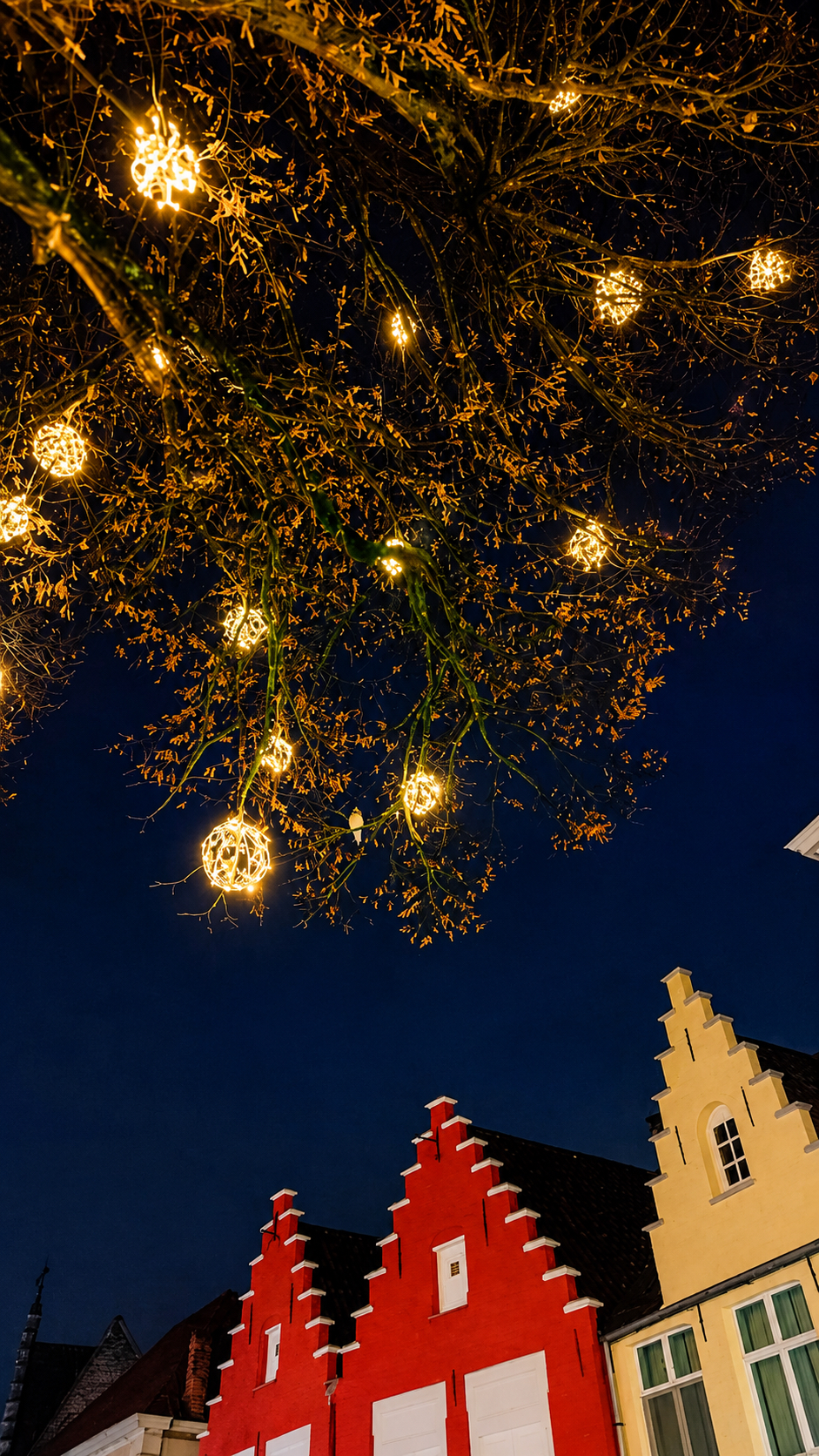
Bruges changes noticeably once the day visitors leave. In December, the Markt and nearby streets are lit for the festive season; at other times, an evening loop along Dijver, Rozenhoedkaai and Groenerei still gives the city its most atmospheric hours. Leave space for dinner and repeat part of the canal walk without adding another checklist of sights.
If you stay longer
Choose one substantial interior rather than collecting every museum. The Church of Our Lady Museum holds Michelangelo's Madonna and Child and the tombs of Mary of Burgundy and Charles the Bold; check the current Musea Brugge programme before visiting, as exhibitions and access can change.
For a quieter outdoor route, walk east through Sint-Anna to the Kruisvest ramparts. Four windmills remain along this green edge of the city, and Sint-Janshuis Mill still operates and can be visited when open. Return through Langestraat and Jan van Eyckplein, once part of Bruges' medieval port district.
Where to eat
Restaurants in Bruges
De Jonkman
€€€€Creative cooking with a strong focus on North Sea fish in a design-led setting in Sint-Kruis. It sits outside the historic centre, so allow for a short taxi ride and reserve well ahead.
Zet'Joe by Geert Van Hecke
€€€€Refined creative French cooking in a warm, art-filled dining room on Langestraat — a strong choice for a formal lunch or dinner within walking distance of the centre.
Le Mystique
€€€Modern French and Mediterranean cooking inside Hotel Heritage, with an opulent historic interior suited to a romantic evening.
Refter
€€€A polished but less formal option for Flemish and regional bistro cooking, known for carefully prepared classics and a courtyard terrace in good weather.
Where to stay
Hotels in Bruges
The Notary
Individually designed suites in a restored 19th-century city palace, with a large hidden garden and private wellness spaces.
Best for a secluded, design-led stay
Hotel Van Cleef
A 17-room private residence on the canal, combining historic character with layered interiors and highly personal service.
Best for boutique scale and canal-side atmosphere
Hotel Dukes' Palace
A five-star hotel in a former Burgundian residence, with a large garden, spa and on-site parking near the Markt.
Best for full-service luxury in the centre
Practical
Before you go
Arriving by train
Use Brugge station for the historic centre, not Brugge-Sint-Pieters. From Brussels-Midi, direct trains run several times an hour and take about one hour. The centre is walkable from the station; use a bus or taxi if you have luggage.
Visiting in winter
Festive programmes, market dates and light routes change each year. Check the current Winter Glow information rather than relying on an older itinerary. Boat services are not guaranteed from mid-November through February.
Avoiding the busiest hours
Markt, Burg and Rozenhoedkaai are busiest from late morning into the afternoon. Start early, use the middle of the day for an interior visit and return to the canals at blue hour. Staying overnight is the simplest way to see a quieter Bruges.
Bruges is small, but it should not feel hurried. Give its towers, chapels and canals a full day, then stay long enough to see the streets after dark and again before they fill the next morning. What stayed with us was not a single landmark, but the change at the edges of the day: mist above the water and lights reflected in the canals.
Feels like home.
Nearby, and next
In this guide — Bruges