
Italy · Campania — A travel guide
Amalfi
A two-day guide to the coast's historic heart — from cathedral steps and maritime history to paper mills, lemon terraces and the quieter hours after the ferries leave.
5 min read
Introduction
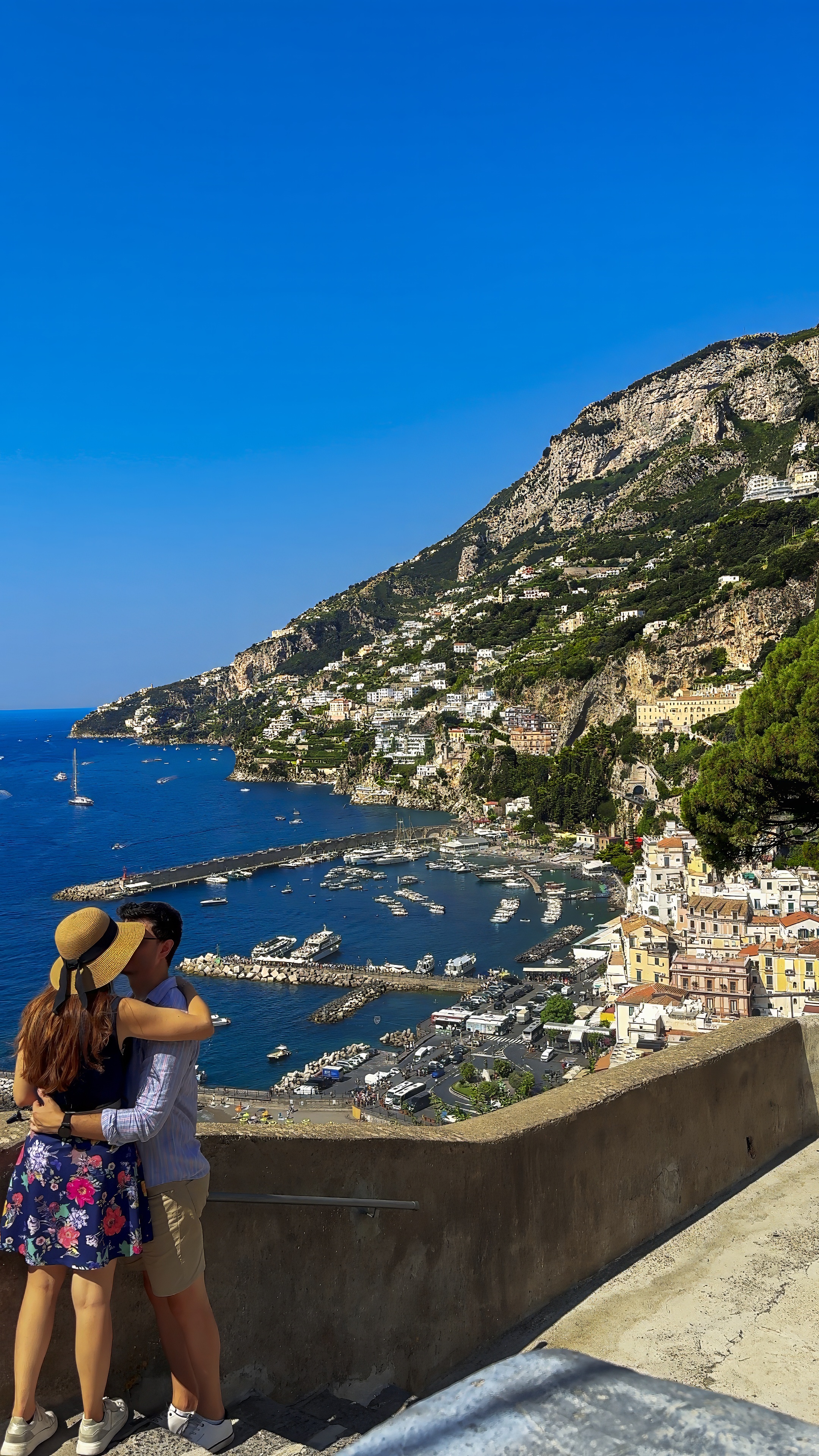
Amalfi is often treated as a beautiful interchange: arrive by boat, photograph the cathedral, then continue along the coast. Stay a little longer and the town becomes far more interesting. Behind the waterfront is the story of a former maritime republic, a compact centre of steep lanes and covered passages, and a green valley where water once powered a centuries-old paper-making tradition.
This guide focuses on Amalfi itself rather than trying to cover the entire coast. Two days give you time for its history, the valley behind the town and the waterfront without reducing everything to a checklist.
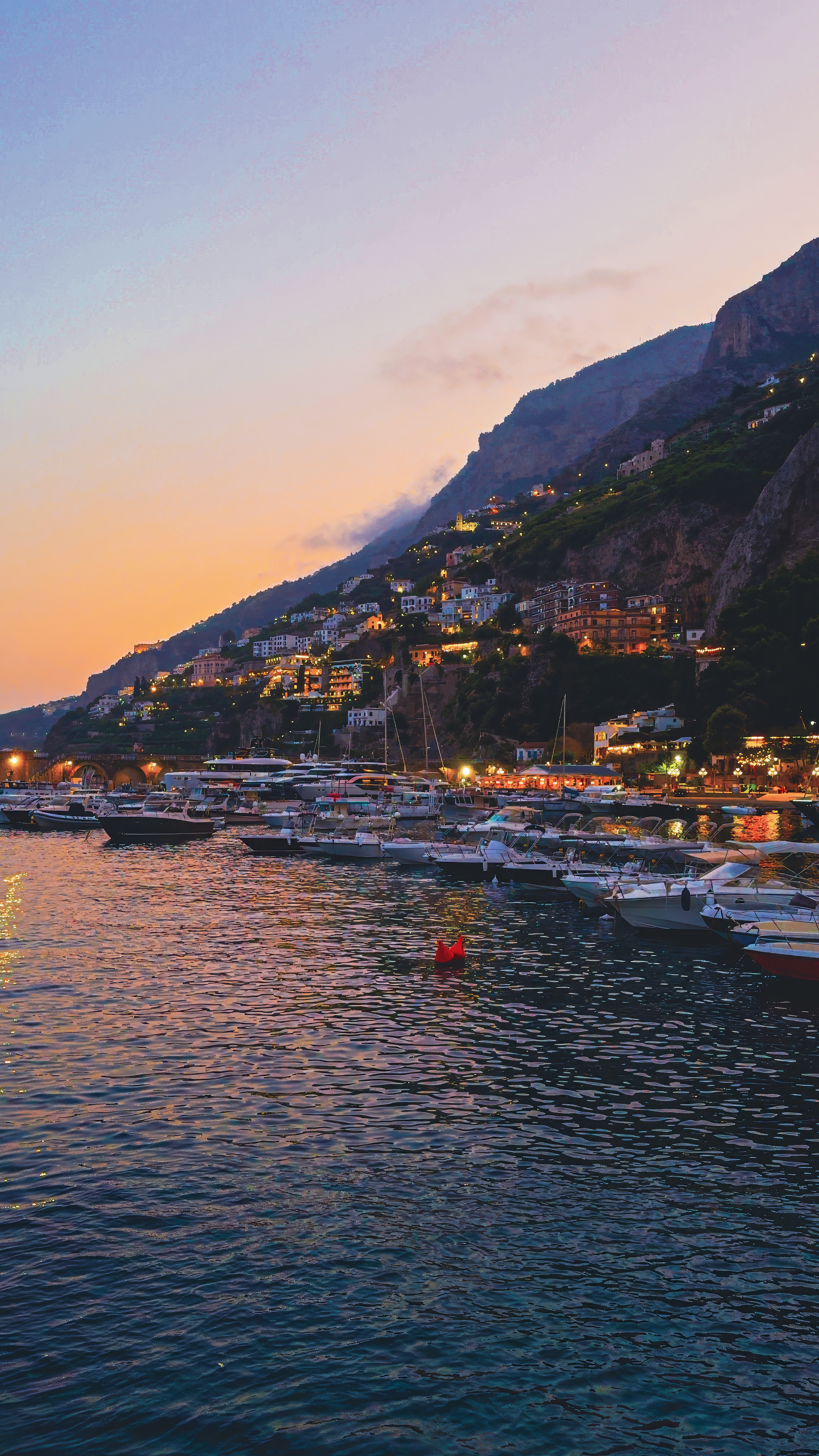
We stayed overnight, and that is when Amalfi made the most sense to us: the harbour turning quieter at dusk, lights appearing across the terraces and enough time to look beyond the waterfront before leaving again.
Amalfi
At a glance
Time needed Two days for the town; longer if using Amalfi as a base.
Best time May, June, September and early October.
Getting there Seasonal ferries from Salerno and coastal towns; SITA buses by road.
Getting around The centre is compact and largely pedestrian; expect steps and uphill walking.
Book ahead Accommodation, dinner and any timed visits in high season.
Day 1
The cathedral, maritime Amalfi and the waterfront
Start at the Cathedral of Sant'Andrea
Begin in Piazza Duomo before the square becomes busy. The striped façade and staircase are only the opening: the monumental complex also includes the Arab-Norman arches of the Cloister of Paradise, the Basilica del Crocifisso, the crypt and the cathedral itself.
- Allow 60–90 minutes
- Best At opening
- Know Opening periods and last admission vary seasonally; check the official page before visiting.
- Official Visit Amalfi ↗
Understand the old maritime republic at the Arsenale
First documented in 1042, Amalfi's old arsenal is one of the clearest reminders that the town was once a Mediterranean maritime power. Its stone pillars and pointed vaults now house a museum of navigation, trade and the medieval city.
- Allow 30–45 minutes
- Best Late morning or early afternoon
- Know The Visit Amalfi information point is also here.
- Official Visit Amalfi ↗
Leave time for the lanes and the sea
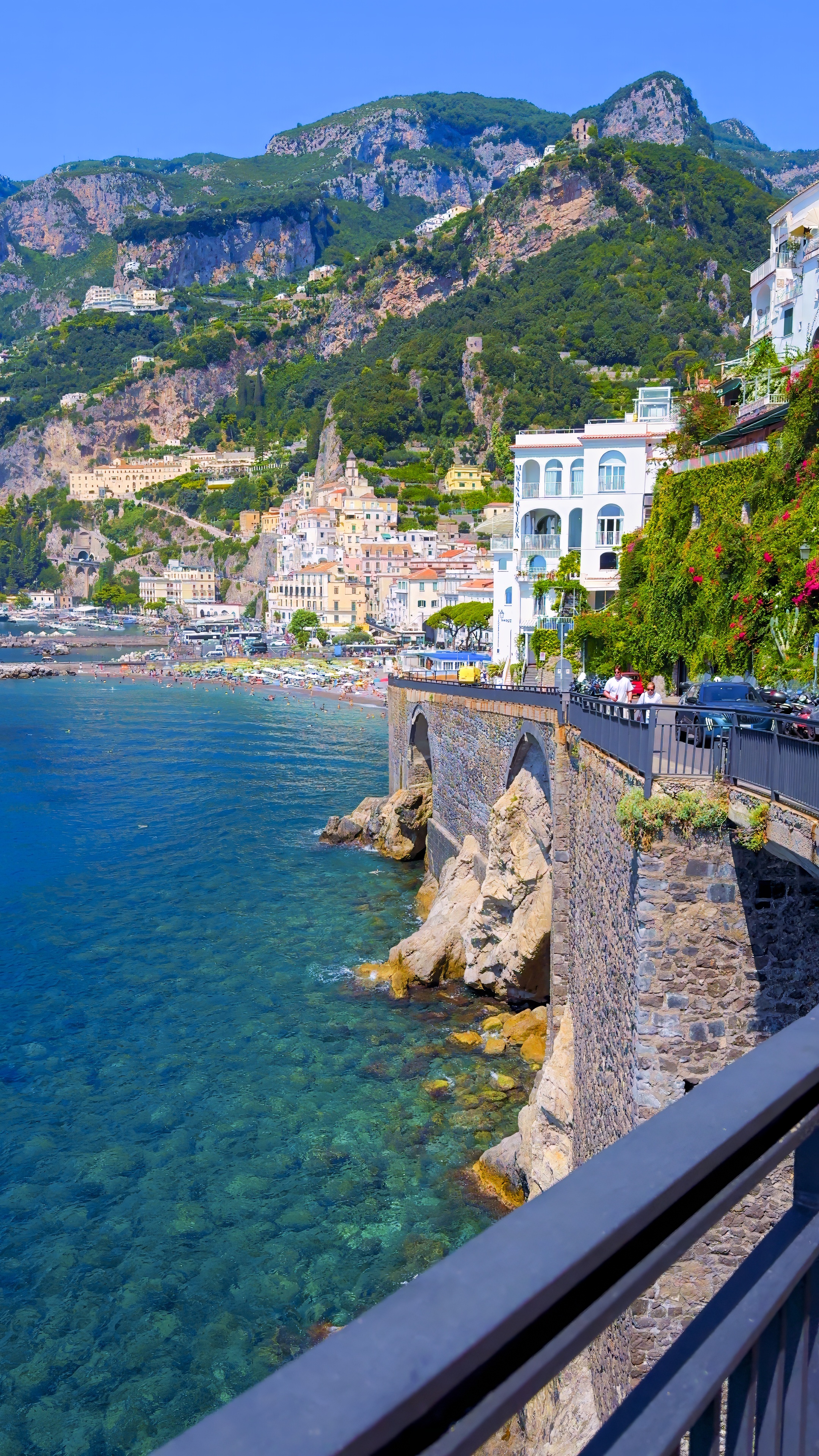
Spend the afternoon in the covered passages and stairways behind the main street, then return to the harbour. Marina Grande is the easiest beach for a swim without leaving town: convenient and serviced rather than secluded.
Stay for dinner if you can. For us, the most memorable view came at dusk, when the last colour sat above the mountains and the harbour lights began to reflect across the water.
Day 2
Paper mills, the green valley and lemon terraces
Begin at the Paper Museum
Inside a former mill, the Museo della Carta preserves working machinery and explains how Amalfi's handmade paper was produced using water power. Visit before continuing farther inland: it gives the surviving ruins in the valley their context.
- Allow 45–60 minutes
- Best Morning
- Book Check the current visit and ticket options online.
- Official Museo della Carta ↗
Walk into the Valley of the Mills
From the centre, follow Via delle Cartiere towards the Canneto stream and a cooler, greener landscape. Water once powered a network of paper mills here; the contrast with the waterfront is what makes the route worthwhile.
- Allow 90 minutes to half a day, depending on the route
- Best Morning, with comfortable shoes and water
- Know Confirm current trail conditions locally, especially after rain.
- Official Visit Amalfi ↗
Return through the upper lanes
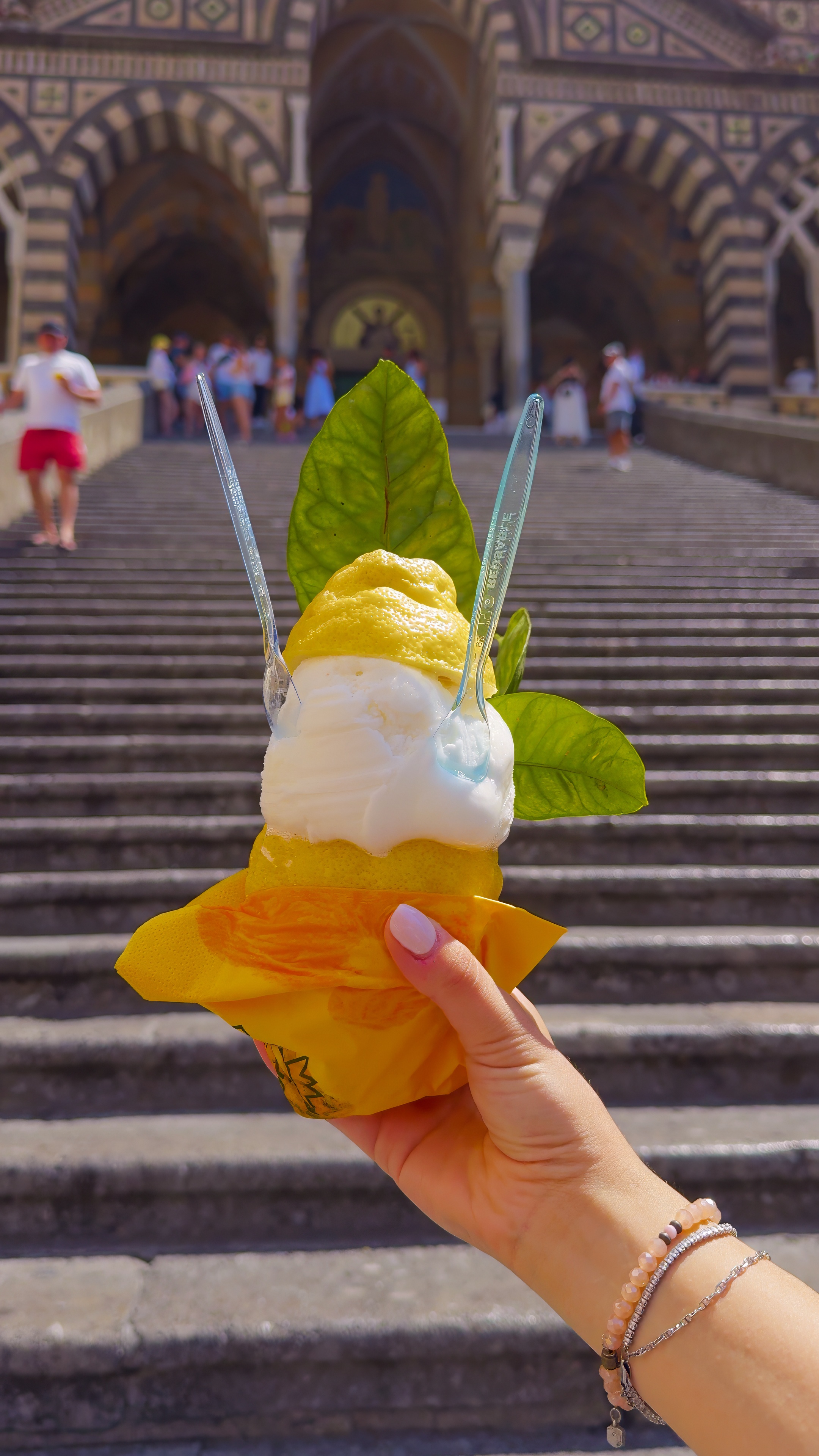
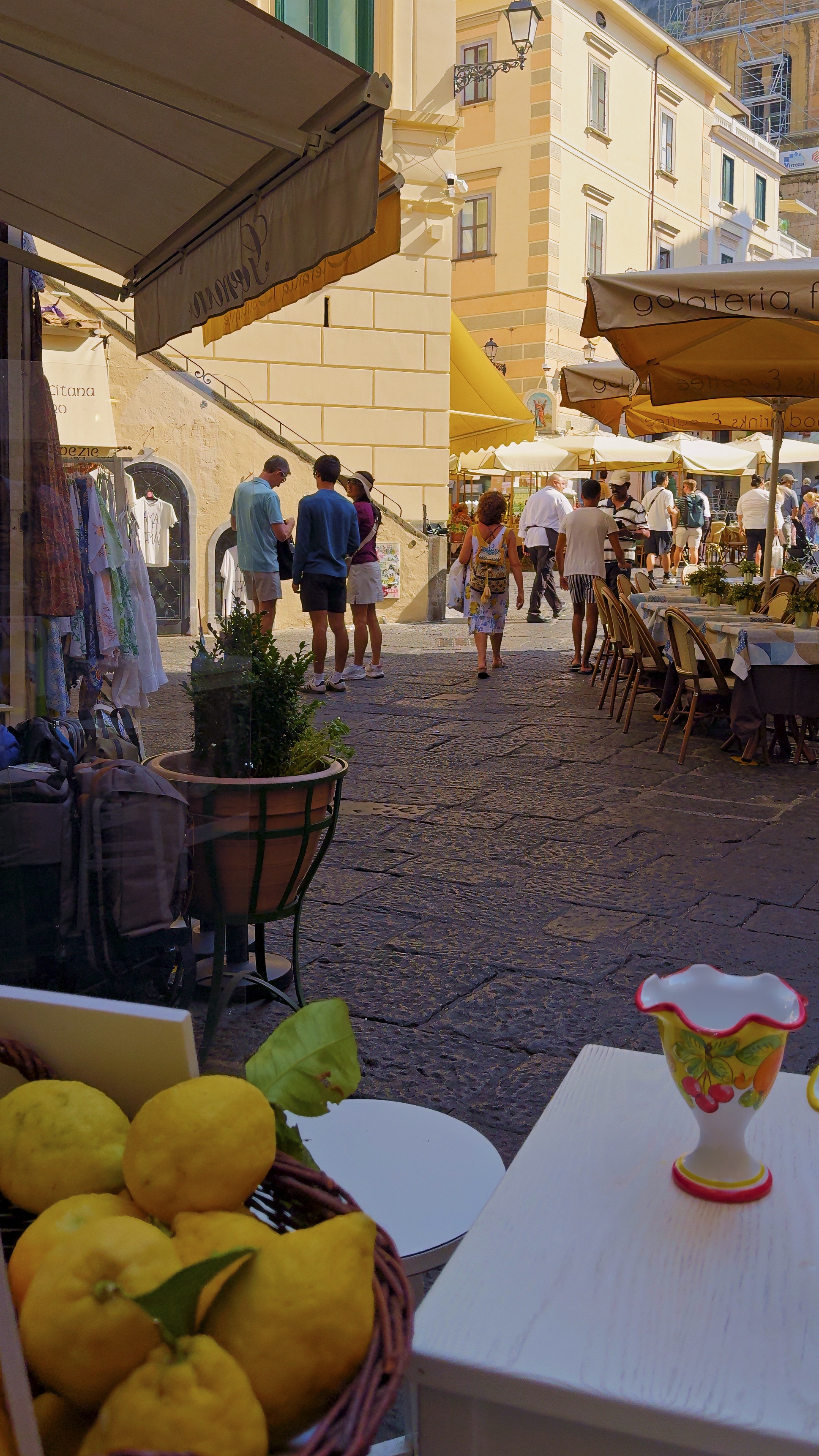
On the way back, take time for the stairways and glimpses of terraces planted with the local Sfusato Amalfitano lemon. We stopped for a lemon sorbet served inside the fruit itself — refreshing, unmistakably Amalfi and worth it for the view of the cathedral steps alone.
If you have another day
Atrani and Ravello
Atrani
Just east of Amalfi, Atrani is close enough for a short excursion and compact enough to explore without a list. Go for the small piazza, lanes and beach; confirm the safest current pedestrian route locally before setting out.
Ravello
Ravello sits high above the coast and requires a bus, taxi or transfer from Amalfi. Allow at least half a day for Villa Rufolo, Villa Cimbrone and the views. It deserves its own pace, so avoid squeezing it between several other coastal towns.
Where to eat
Restaurants in Amalfi
La Caravella dal 1959
€€€€Refined Campanian and Mediterranean cooking in one of Amalfi's best-known dining rooms. Choose it for a formal dinner in the centre and reserve well ahead.
Sensi
€€€€Creative Mediterranean cooking near the cathedral, with an à la carte lunch and tasting-menu approach at dinner.
Marina Grande
€€€A polished seafood restaurant directly by the water. Reserve a terrace table during the warmer months.
Sauté
€€–€€€A more relaxed option for lunch on the panoramic terrace at Hotel Miramalfi, with seafood and Mediterranean dishes overlooking the coast. Check access and opening periods before going.
Where to stay
Hotels in and near Amalfi
Luxury
Anantara Convento di Amalfi Grand Hotel
A 13th-century former convent above Amalfi, with cloisters, sea-facing terraces and access to the centre on foot.
Best for Historic atmosphere close to town
Luxury
Hotel Santa Caterina
A family-run five-star hotel set into the cliffs, with Mediterranean interiors, sea views and a private beach club reached by lift.
Best for Classic Amalfi Coast glamour and private sea access
Luxury
Borgo Santandrea
A design-led five-star retreat in Conca dei Marini, a short drive west of Amalfi, with terraced gardens, a private beach and rooms facing the sea.
Best for Contemporary design and a quieter resort stay
Practical
Before you go
Arriving without a car
In season, ferries are the most scenic way to reach Amalfi from Salerno and neighbouring coastal towns. Services are weather-dependent, so check the operator on the day. SITA buses run by road year-round, but traffic can lengthen journeys considerably.
If you are driving
The historic centre is largely pedestrian and parking is limited. Luna Rossa is currently the only town car park permitting stays of one or more days. Check live availability and vehicle restrictions; unless a car is essential to the wider trip, Amalfi is easier without one.
Moving along the coast
Use ferries when the sea is operating and buses when it is not, but avoid building a tight day around several connections. Timetables and frequencies change by season.
What to pack
Wear comfortable shoes for polished stone, steps and steep lanes. In warm weather, carry water and walk the valley early; bring a light layer for boat journeys.
Book ahead · official links
Amalfi deserves more than the interval between two ferries. Give the town one day for the cathedral, its maritime history and the waterfront, and another for paper mills, shaded paths and the terraces behind the centre. The coast remains spectacular, but it is the history and the quieter spaces behind it that make Amalfi feel like a destination of its own.
Feels like home.
Nearby, and next
In this guide — Amalfi