
Italy · Tuscany — A city guide
Florence
A considered two-day route through Renaissance Florence — what to book, how to group the sights and where to leave room for the city itself.
6 min read
Introduction
Florence is compact and almost entirely walkable: most of the main areas are within walking distance of one another. That closeness is deceptive. The Duomo, the Uffizi and the Accademia each need planning, and trying to fit all three into a single day tends to leave little room for anything else.
Two days work well when each morning is built around one major booked entry, and the rest of the day is grouped by area. This route keeps the cathedral, David and the viewpoints above the river together on the first day, and gives the second to the Uffizi, Santa Croce and the Oltrarno.
Florence
At a glance
Time needed Two full days; three if you want both Pitti and Boboli and a slower museum pace.
Best base The historic centre for first-time convenience; the Oltrarno for quieter evenings and artisan streets.
Best time April–May and September–October; expect heat and crowds in summer.
Getting around Walk; use the T2 tram for Florence Airport and taxis only when useful.
Book ahead Brunelleschi's Dome if climbing, the Uffizi, the Accademia and destination dinners.
The itinerary
Two days in Florence
Day 1
The cathedral, David and the view from above
Piazza del Duomo → Accademia → San Lorenzo → Ponte Vecchio → San Miniato / Piazzale Michelangelo
01
The Duomo before the square fills
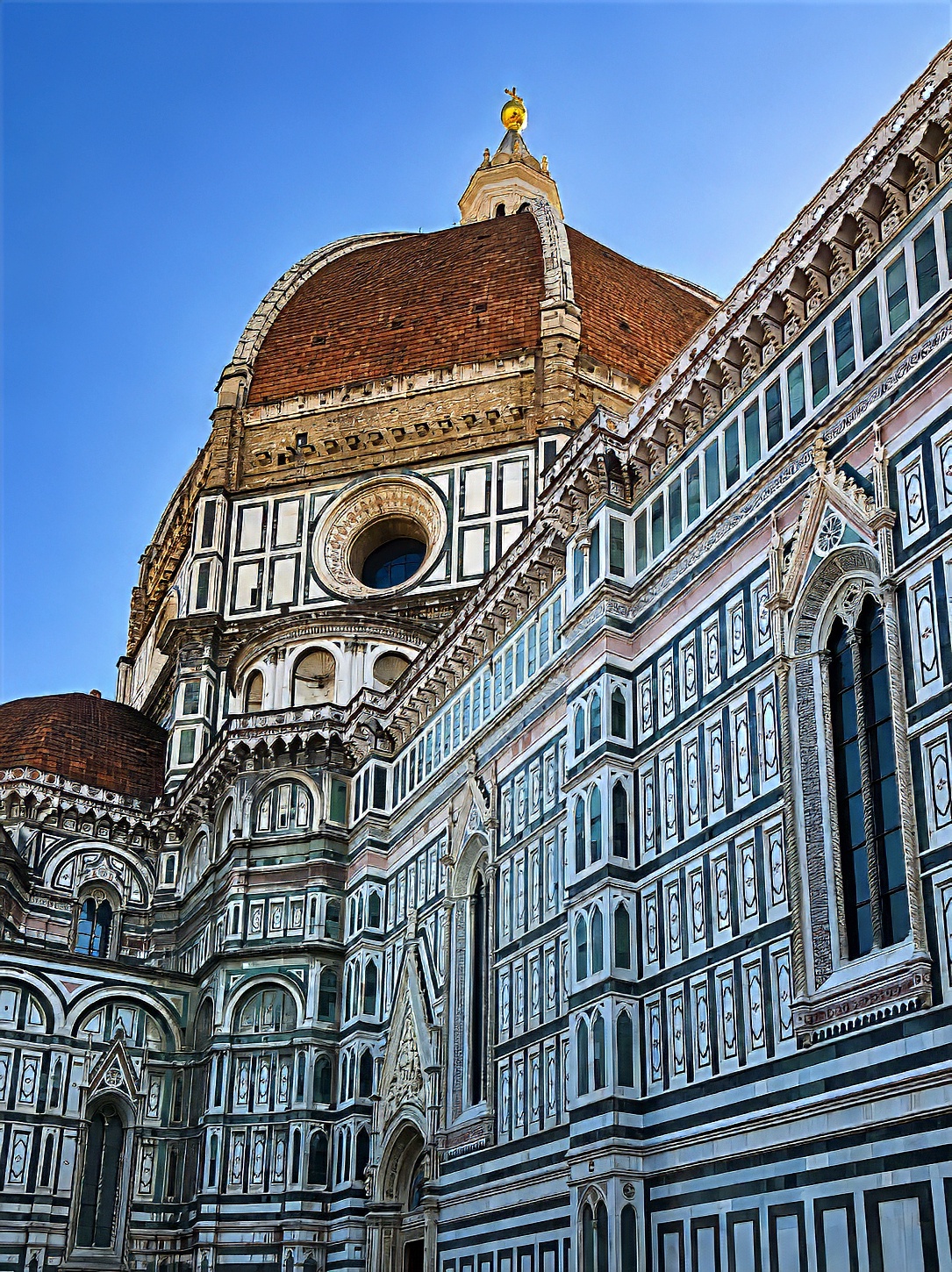
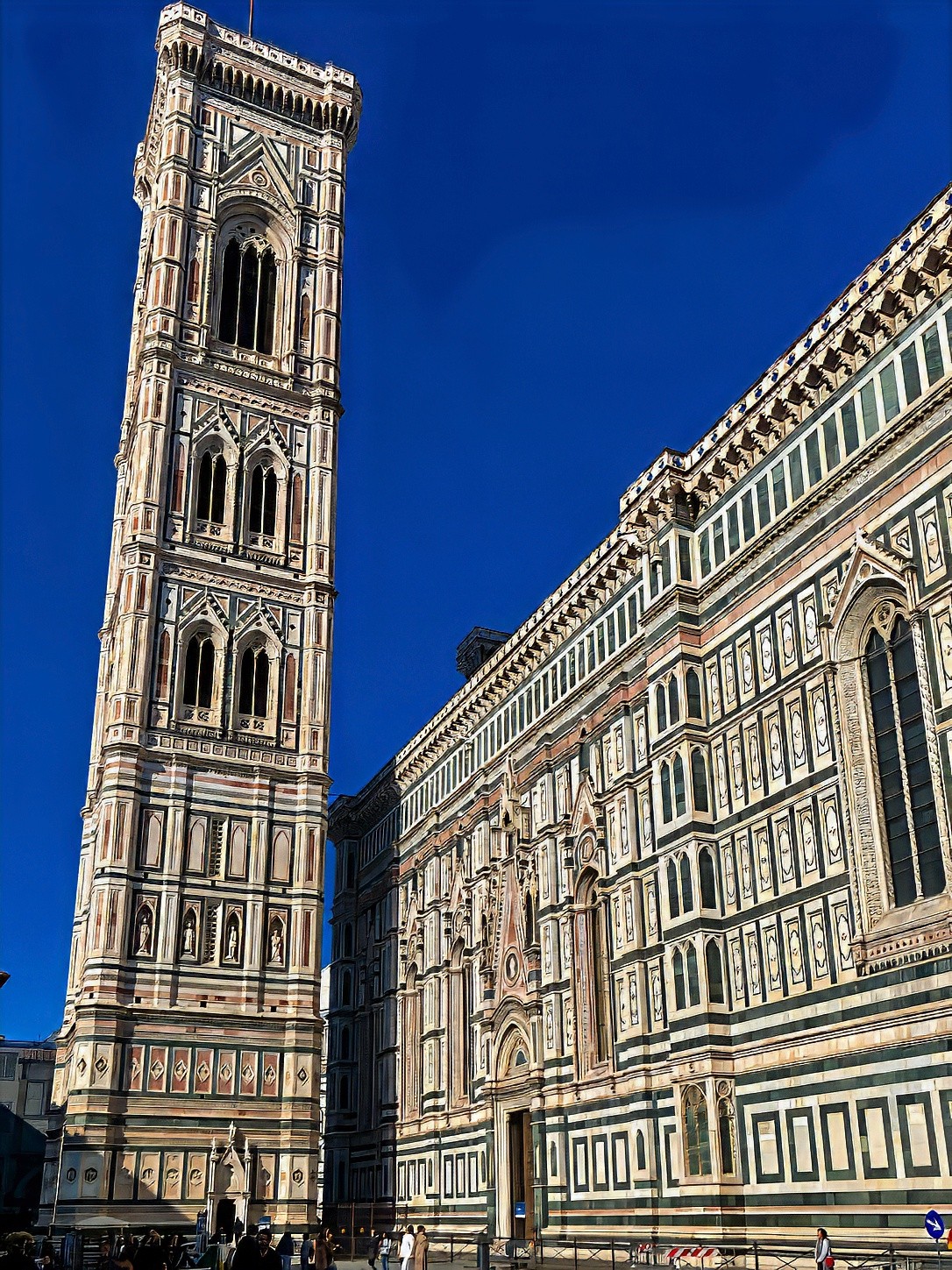
Start with the exterior and the cathedral itself. Entry to the cathedral itself is free, without a ticket, though it is closed to visitors on Sundays. The other monuments are covered by three passes, each valid for three calendar days, with its one timed slot on the first day. The Brunelleschi Pass includes the Dome, the Bell Tower, the Baptistery, the Museum and Santa Reparata; the Giotto Pass covers the same without the Dome; the Ghiberti Pass covers the Baptistery, the Museum and Santa Reparata.
A timed slot is mandatory for the Dome. Choose one climb — the Dome or Giotto's Bell Tower — rather than both in the same morning.
- Allow 2–3 hours
- Best The first slot of the day
- Official Duomo tickets ↗Plan your visit ↗
- Map Piazza del Duomo ↗
02
The Accademia for David, without losing the morning
The Galleria dell'Accademia is a short walk north of the Duomo. David is the reason most visitors come, and the gallery is compact enough to see well in a focused visit. Reservation is highly recommended; buy only through the official ticketing channel.
- Allow 60–90 minutes
- Official Accademia tickets ↗
- Map Galleria dell'Accademia ↗
03
San Lorenzo and a practical lunch pause
This is a practical pause rather than a third museum. Walk the perimeter of the Basilica of San Lorenzo and the market streets around it, then go into the Mercato Centrale. The ground floor keeps the historic food stalls; the upper floor is a food hall, useful for a quick, informal lunch. The two levels keep different hours, so check them on the day.
If you want to add the Medici Chapels, give them separate time and lighten the afternoon accordingly rather than squeezing them in between the morning's bookings and the walk.
- Allow 60–90 minutes
04
Cross the centre, then climb for the view
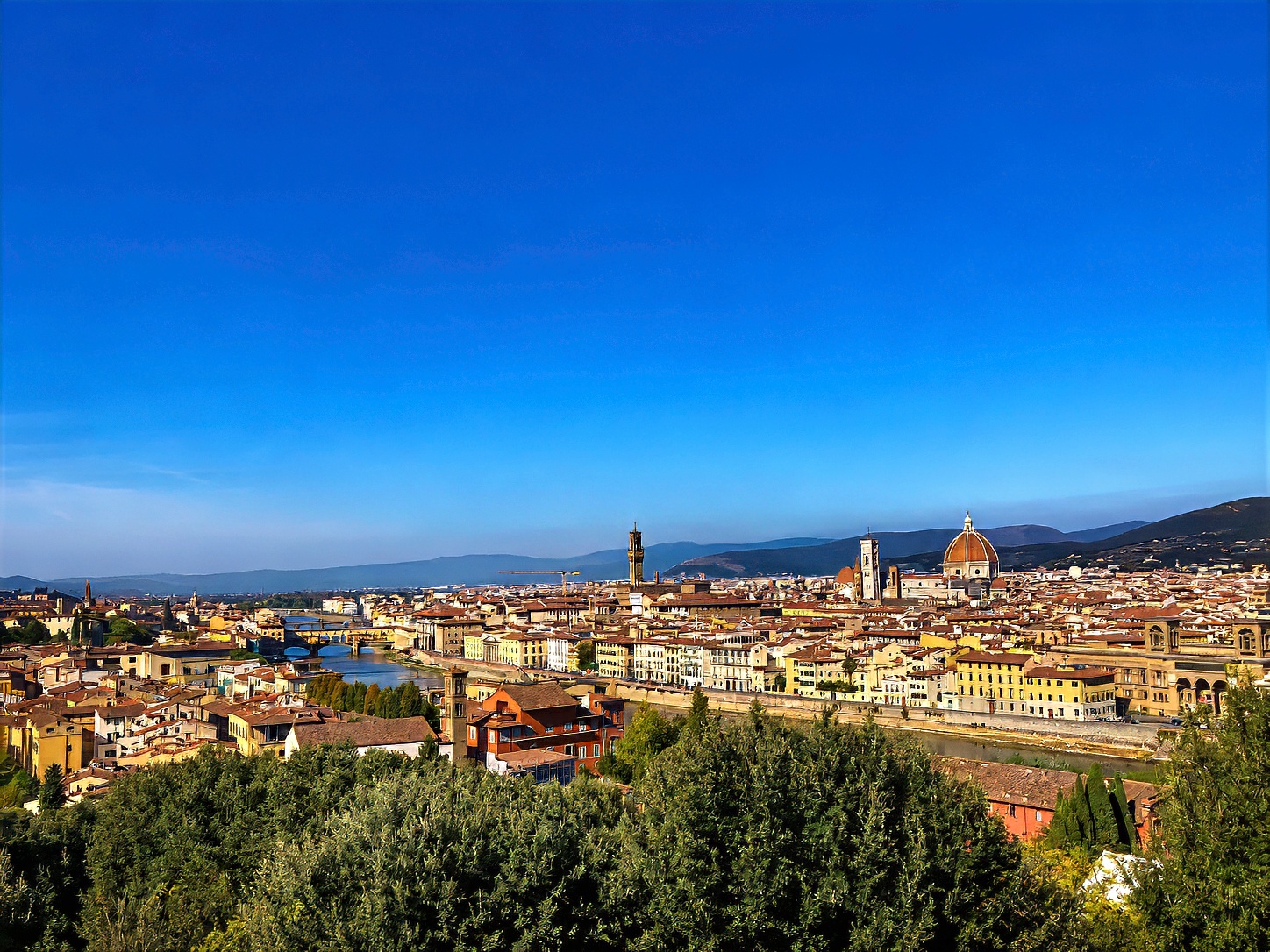
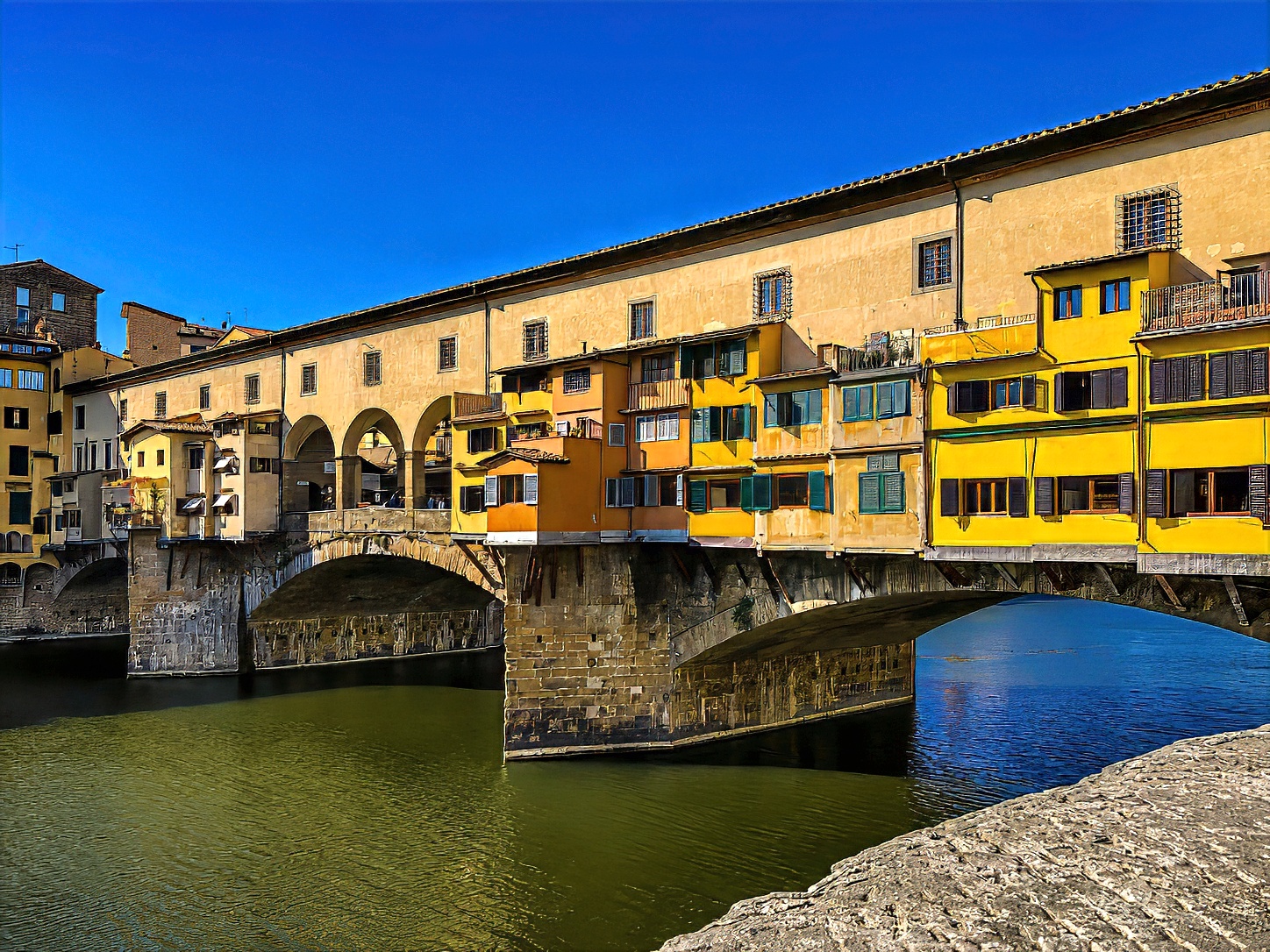
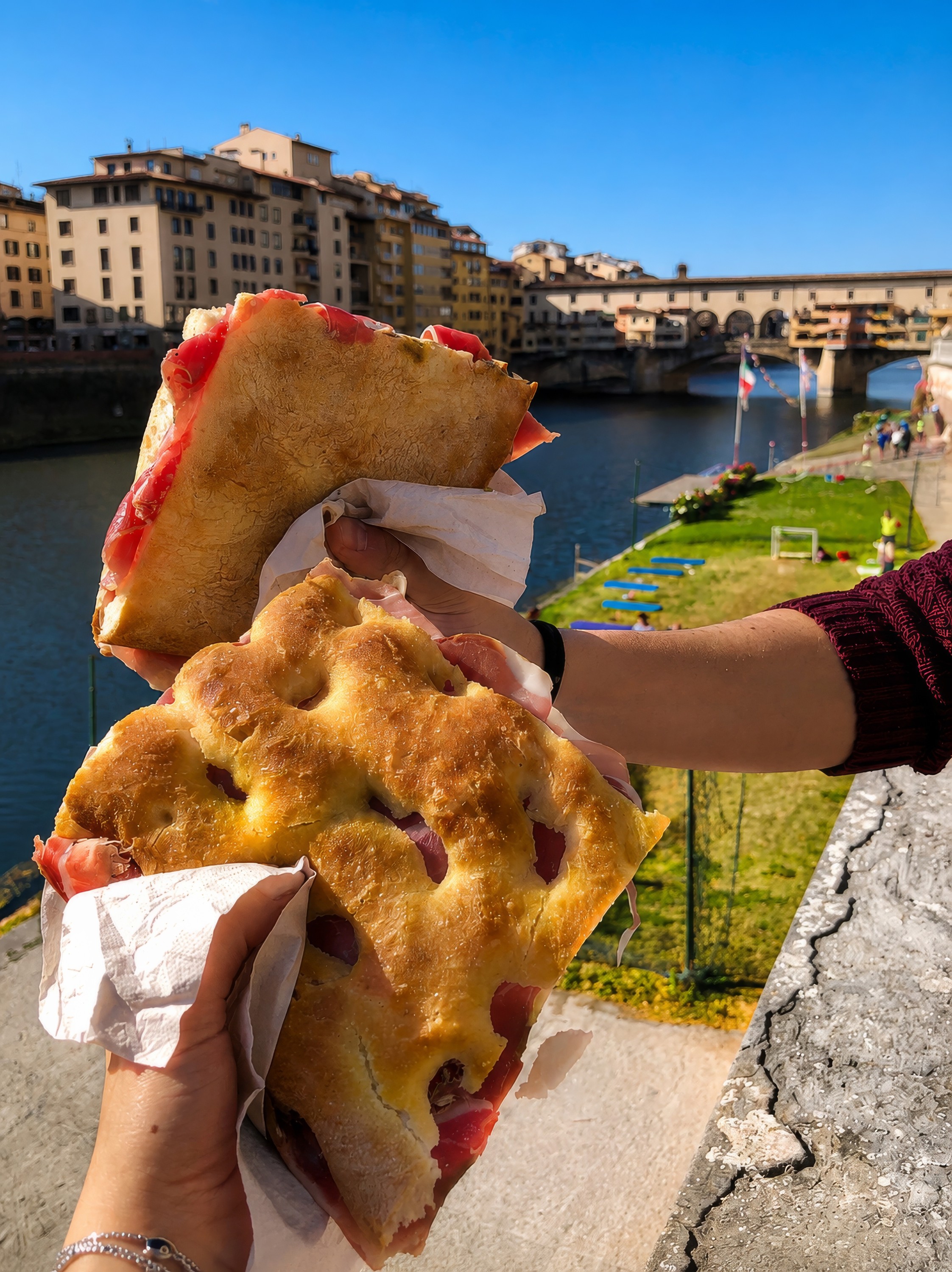
From Piazza della Repubblica, continue to Piazza della Signoria and across the Ponte Vecchio into the Oltrarno. From there, the road climbs to San Miniato al Monte and Piazzale Michelangelo, with a view back across the whole city.
The viewpoint is free. The ascent is steep; a bus or taxi is a perfectly valid way up.
Time the climb for the hour before sunset, when the light falls across the rooftops, then walk down the Rampe del Poggi to San Niccolò, a quieter Oltrarno quarter by the river, for an evening that needs no further booking.
- Allow 2–3 hours with the walk
- Best Late afternoon
- Map San Miniato al Monte ↗
Day 2
The Uffizi, Santa Croce and the Oltrarno
Uffizi → Piazza della Signoria → Santa Croce & Sant'Ambrogio → Santo Spirito → Pitti / Boboli
05
The Uffizi at the first useful slot
The Uffizi is large enough to exhaust a morning. Buy in advance through the official platform, and follow a selected route through the rooms that matter most to you rather than trying to see everything. The gallery is closed on Mondays.
The Vasari Corridor, which runs from the Uffizi over the Ponte Vecchio to the Boboli Gardens, can only be visited with a combined Uffizi ticket and a mandatory reservation. Add it only if you want the morning to end on the Oltrarno side.
- Allow 2–3 hours
- Official Uffizi tickets ↗ Vasari Corridor ↗
- Map Uffizi ↗
06
Santa Croce and Sant'Ambrogio
After the Uffizi, move east through Piazza della Signoria to Santa Croce. It is a visitable monumental complex, not only a square: if you go inside, allow around 60–90 minutes and check the opening times before you set out.
Continue to the Mercato di Sant'Ambrogio, a covered neighbourhood market. It makes a sensible lunch stop, particularly earlier in the day, when the stalls are at their busiest.
- Allow 1.5–2 hours
- Official Santa Croce ↗Sant'Ambrogio market ↗
07
The Oltrarno on foot
Cross back over the river and walk a simple loop: Piazza Santo Spirito, then Via Maggio and Via dei Serragli. Workshops, antique dealers and courtyards appear along the way, though not every workshop will be open when you pass.
The value of this stop is the neighbourhood itself — smaller squares and a more residential rhythm than the centre — so there is no need to add another ticketed entry.
08
Choose Pitti and Boboli — or keep the afternoon open
Palazzo Pitti and the Boboli Gardens need two to three hours of their own. If that feels like too much after the Uffizi, stay in the Oltrarno instead and cross back over the Ponte Santa Trinita.
Palazzo Pitti is closed on Mondays; the Boboli Gardens close on the first and last Monday of each month.
- Allow 2–3 hours for the palace and gardens
- Official Pitti and Boboli tickets ↗
- Map Palazzo Pitti ↗
Book ahead
The three reservations that shape the trip
| Entry | Booking | Plan for |
|---|---|---|
| Brunelleschi's Dome | Required timed slot | Choose only if climbing |
| Uffizi | Reserve the first useful morning slot | 2–3 hours |
| Accademia | Reservation highly recommended | 60–90 minutes |
Prices change; the official links above carry the current rates.
Where to eat
Restaurants in Florence
- €€€€
Enoteca Pinchiorri
A formal, landmark special-occasion dinner with an exceptional wine cellar.
- €€€€
Locale Firenze
Contemporary cooking and cocktails inside a historic palazzo; strongest for design-led atmosphere.
- €€€
- €€
Il Santo Bevitore
Convivial Tuscan cooking in Santo Spirito, useful for the Oltrarno evening.
Where to stay
Hotels in Florence
Four Seasons Hotel Firenze
Renaissance-palazzo scale, a private garden and a spa.
Best for a full luxury retreat
Portrait Firenze
A central riverside base near the Ponte Vecchio.
Best for location and contemporary service
AdAstra
A 16-room design-led residence in the Oltrarno overlooking a private garden.
Best for a quieter boutique stay
Practical
Before you go
- Arrival
- Santa Maria Novella station is central; the T2 tram links Florence Airport to the centre. Feel Florence ↗
- Walking
- A compact centre, stone paving and long museum days: comfortable shoes matter.
- Car
- Do not drive into the historic centre casually; it is a camera-controlled ZTL. If your hotel is inside the zone, agree access with it before arrival: under the Comune's rules the hotel registers your plate for transits made during your stay, using the shortest route to the property. Confirm the details directly with the hotel. ZTL · Comune di Firenze ↗
- Churches
- Shoulders and knees covered; services and opening schedules can affect access.
- Opening days
- Check the official calendars when building the two days, as closing days differ: the Uffizi and Palazzo Pitti close on Mondays, and the cathedral is closed to visitors on Sundays.
- Museum rhythm
- Keep fixed entries to one or two per day, and leave real walking time between them.
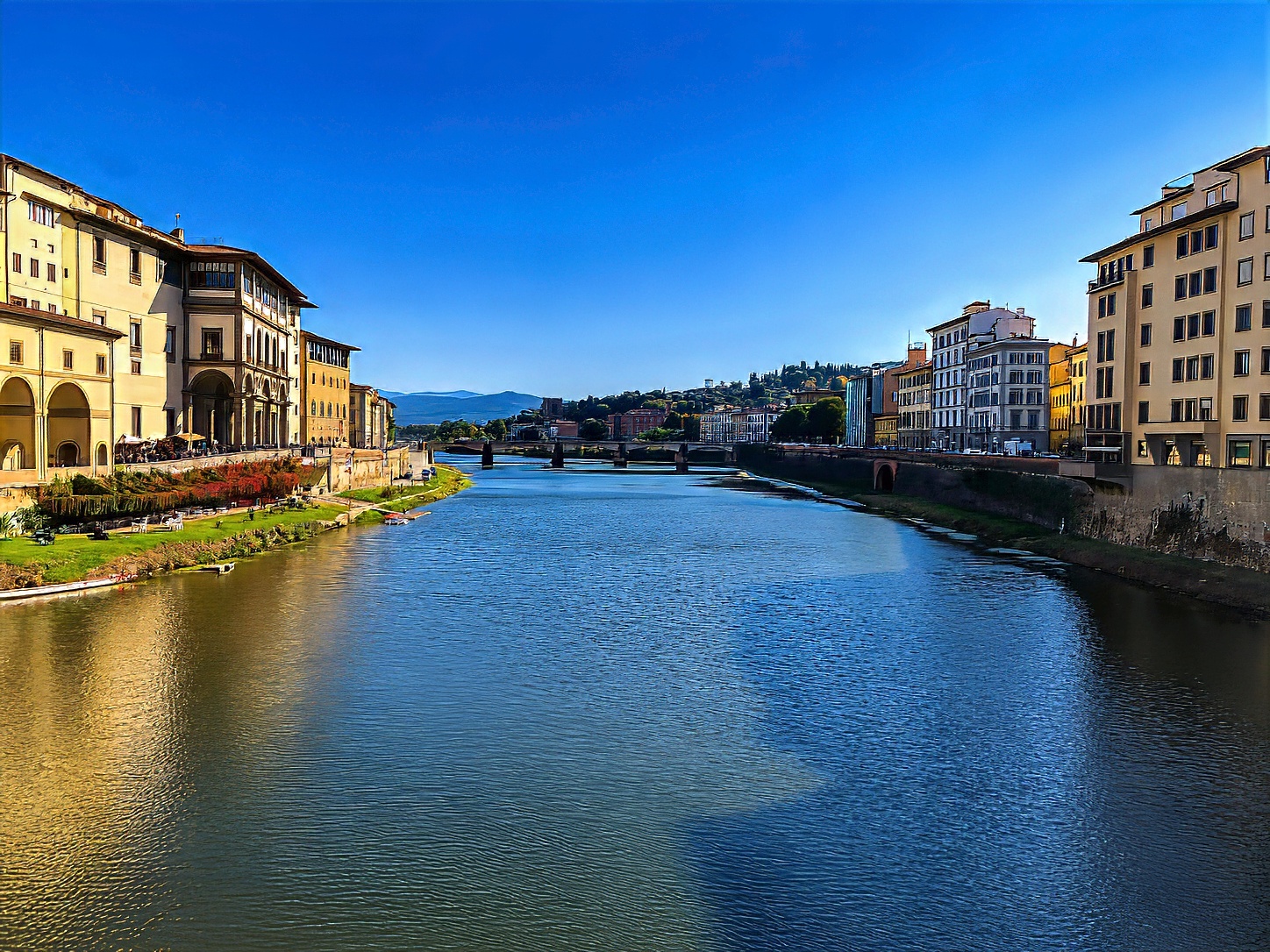
In Florence, a small number of well-chosen reservations create the skeleton of the trip. What fills the rest is what tends to stay with you — the streets between the monuments, the river and its bridges, and the slower hours in the Oltrarno once the museums are done.
Feels like home.
Nearby, and next
In this guide — Florence