Spain · Andalusia — A 3-day travel guide
Seville
Two or three days in Seville, organised by area — what to book, where to begin each morning, and how to plan around the heat, from the Alcázar's patios to the river at Triana.
9 min read
Introduction
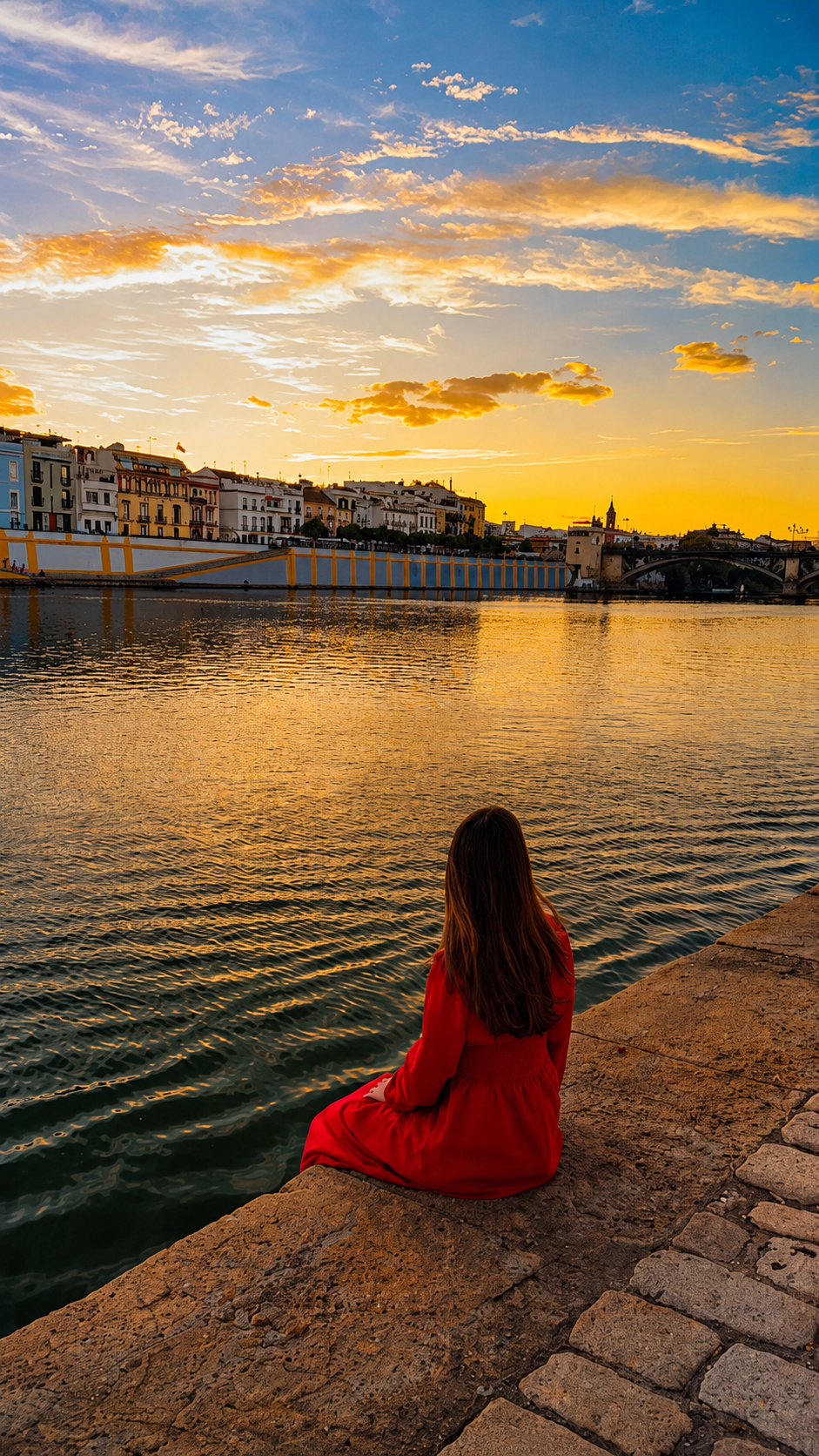
Seville is compact enough to cross on foot in an afternoon, but it rewards a slower plan. The great monuments sit close together in the old centre; the palaces and patios are scattered through the streets to the north; and Triana, the former ceramics quarter, lies across the Guadalquivir. Grouping the days by area means less walking in the heat and more time inside the places worth seeing.
This guide covers two or three days. Each morning starts with the visit that most needs a timed ticket, the middle of the day is kept for shaded interiors and a long lunch, and the evenings move outdoors, towards the river. If you only have two days, combine Day 3's park and riverside walk with the end of Day 2.
The essentials
Seville at a glance
Time needed two full days for the main sights; three to add the palaces, Triana and the park without rushing.
Best time spring and autumn. July and August can be extremely hot; plan outdoor walking for early morning and evening.
Getting around almost entirely on foot; the historic centre is flat and compact. Taxis are useful at night or in the heat.
Where to base Santa Cruz or the Arenal for the monuments; Triana for a quieter riverside base a short walk across the bridge.
Book ahead the Real Alcázar and the Cathedral with the Giralda — both sell timed tickets online.
How we'd spend three days
Day 1 — The monumental centre · Cathedral and Giralda, Real Alcázar, Barrio Santa Cruz.
Day 2 — Palaces, the old centre & Triana · Casa de Pilatos, El Salvador or the Setas, then across the river for the evening.
Day 3 — María Luisa & the river · Parque de María Luisa, Plaza de España, the Arenal and the riverside walk.
Day 1Morning
The Cathedral & the Giralda
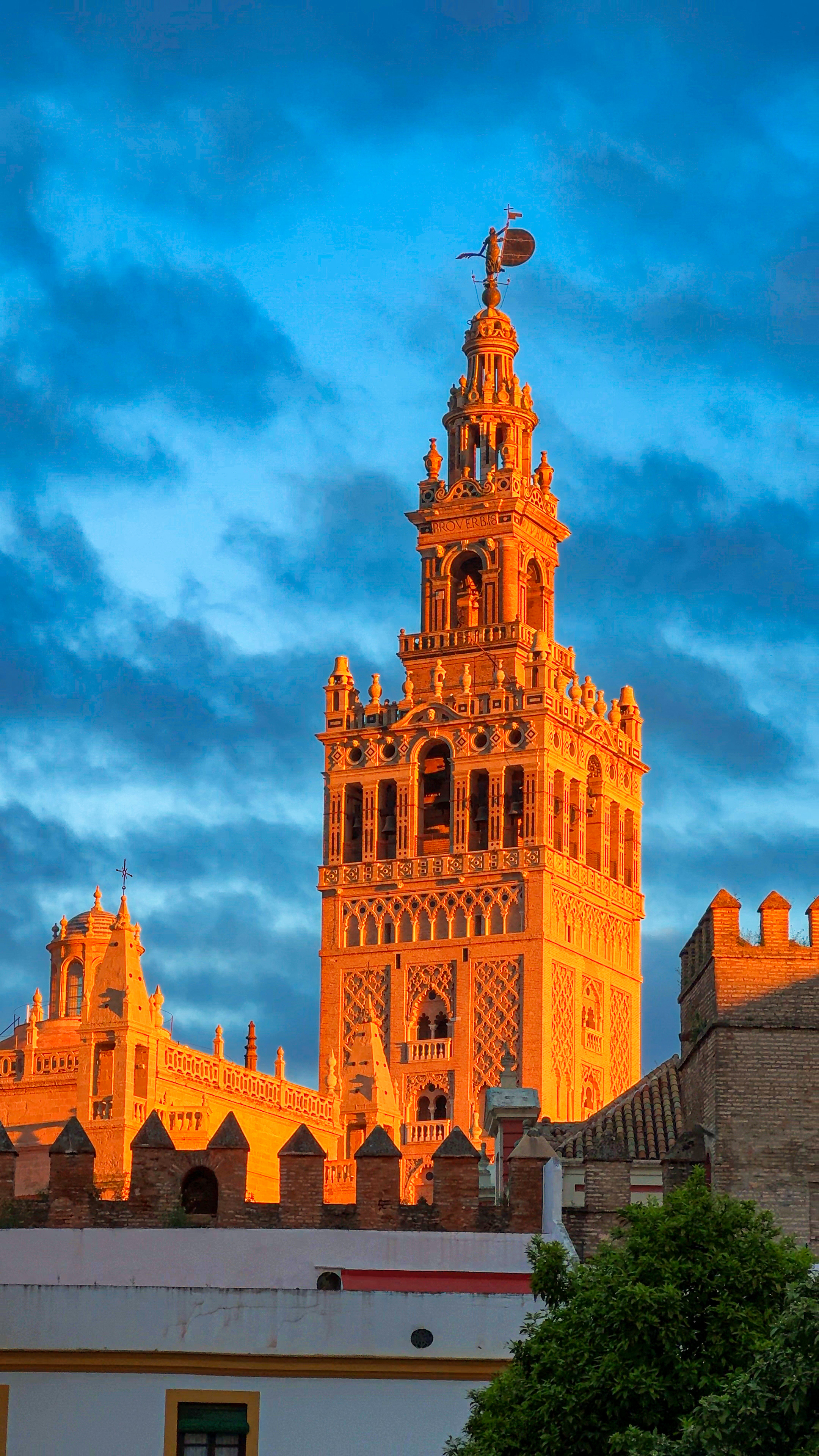
One of the largest Gothic cathedrals in the world, built on the site of the city's great mosque. Inside, look for the carved main altarpiece, the choir and the monument to Christopher Columbus. The visit includes the climb up the Giralda, the former minaret turned bell tower, by a series of ramps rather than stairs, and the Patio de los Naranjos at the exit.
The general ticket also covers the Church of El Salvador, which you can use on Day 2.
- Allow 1.5–2 hours, including the Giralda
- Best the first slot of the day, before the tower becomes crowded
- Book online in advance; online and ticket-office visitors use different doors, so check which one on your ticket
- Know shoulders must be covered; sleeveless, low-cut or see-through tops and very short shorts or skirts are not allowed. Services can affect access
- Official site Catedral de Sevilla ↗
- Map Google Maps ↗
Day 1Late morning
The Real Alcázar
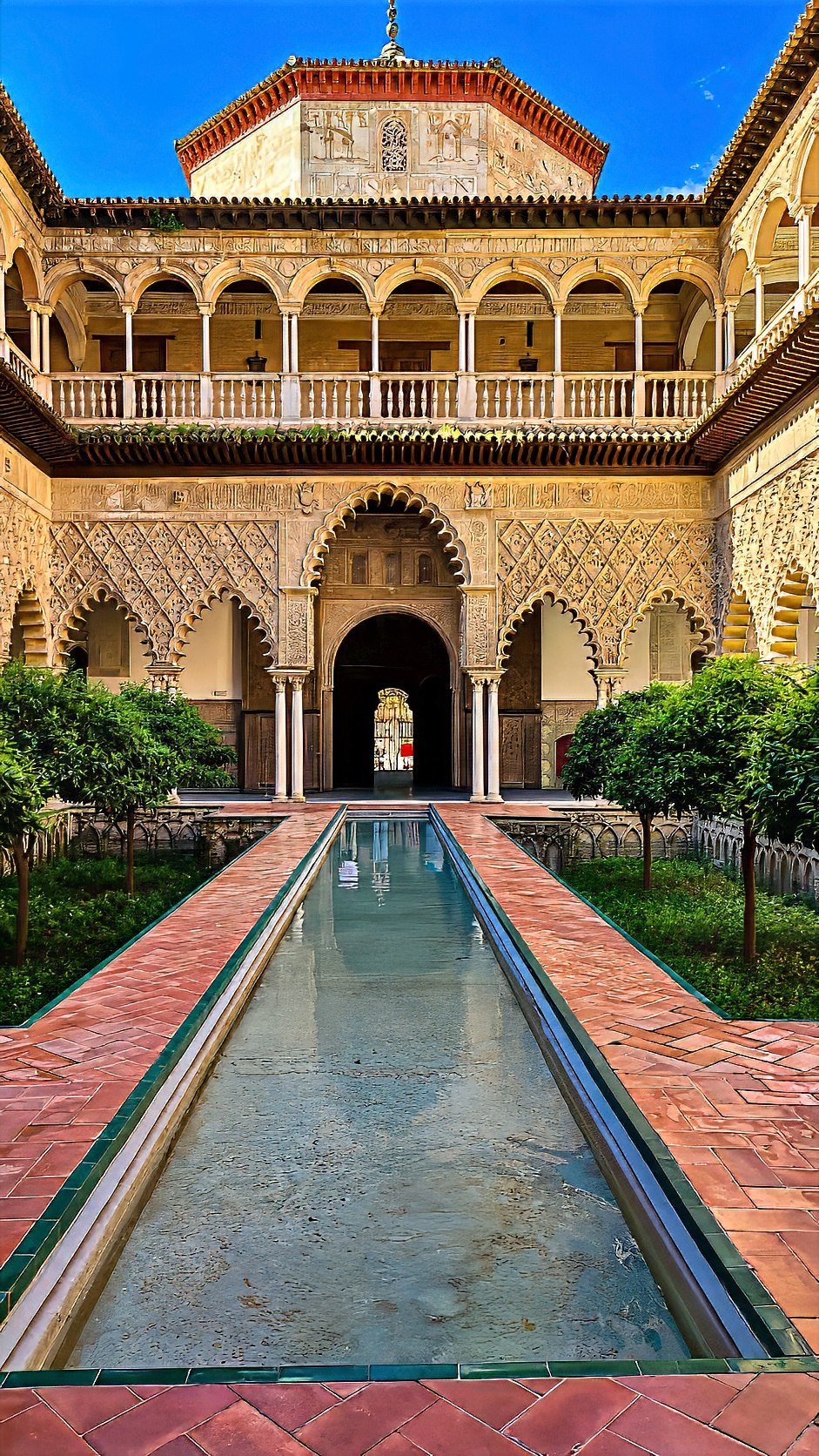
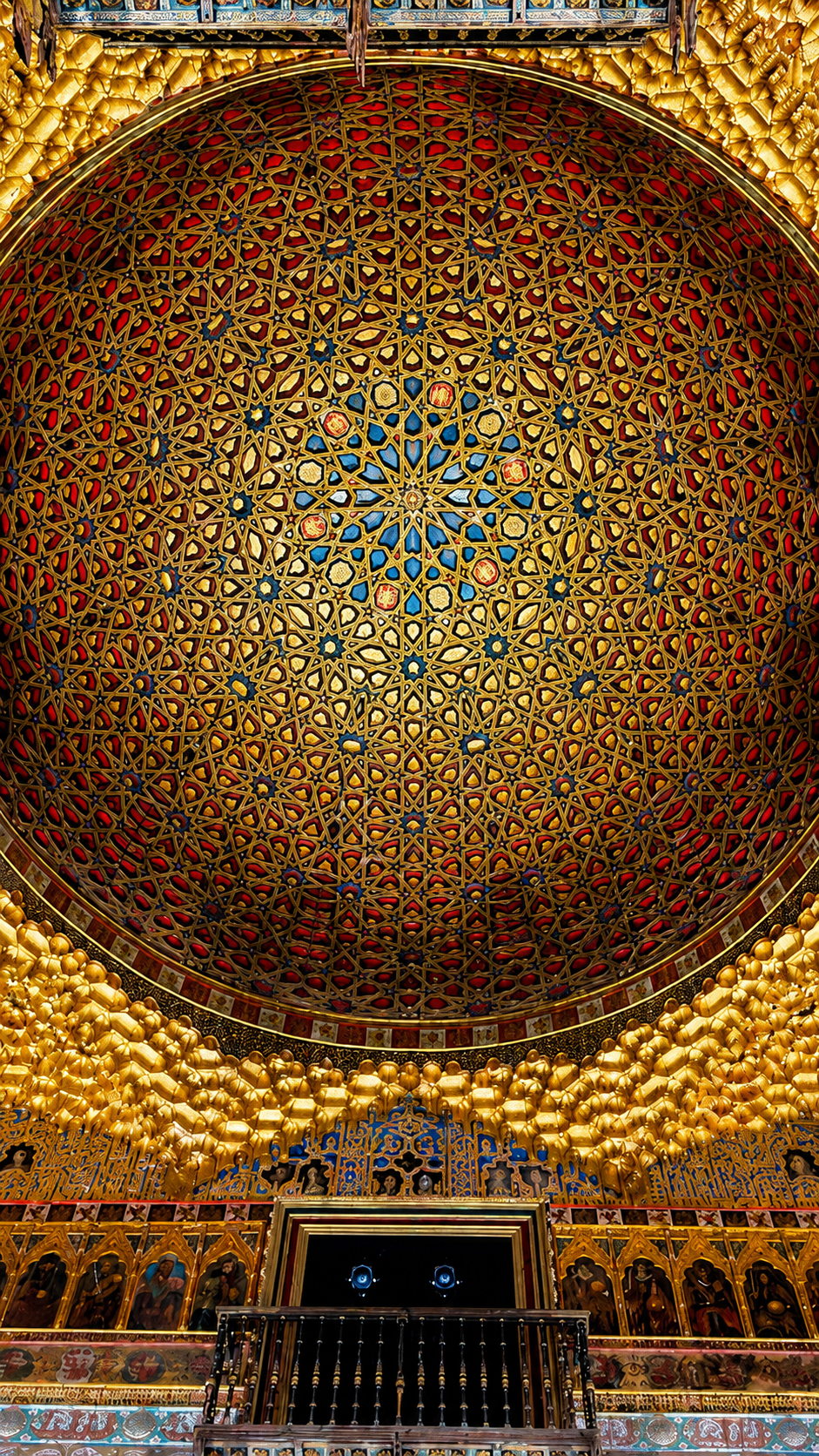
A royal palace still in use, built and rebuilt from the Islamic period to the Renaissance. The Palacio de Pedro I is the core of the visit: carved stucco, tiled dados and the Patio de las Doncellas — followed by the gardens, which need time of their own.
The upper royal apartments, the Cuarto Real Alto, are a separate timed visit if you want to see the rooms still used by the Spanish royal family.
- Allow 2–3 hours with the gardens
- Best early in your slot; the gardens are most comfortable before the midday heat
- Book essential in high season; buy only through the official site
- Know opening hours change between winter and summer — check before choosing a slot
- Official site Real Alcázar de Sevilla ↗
- Map Google Maps ↗
Day 1Afternoon
Barrio Santa Cruz
The former Jewish quarter begins at the Alcázar's walls: narrow lanes, whitewashed houses and small squares planted with orange trees. Walk it slowly: Plaza de Doña Elvira, Plaza de Santa Cruz and the Callejón del Agua along the old wall are natural pauses.
Many of the lanes are shaded, which makes this the easiest part of the day to walk in the afternoon.
- Allow 1–2 hours
- Best late afternoon, when the day groups have moved on
- Know the lanes are a maze by design; a map helps more than signposts
- Map Google Maps ↗
Day two
Palaces, the old centre & Triana
Casa de Pilatos·El Salvador·Setas·Mercado de Triana·Puente de Isabel II·Calle Betis
Day 2Morning
Casa de Pilatos
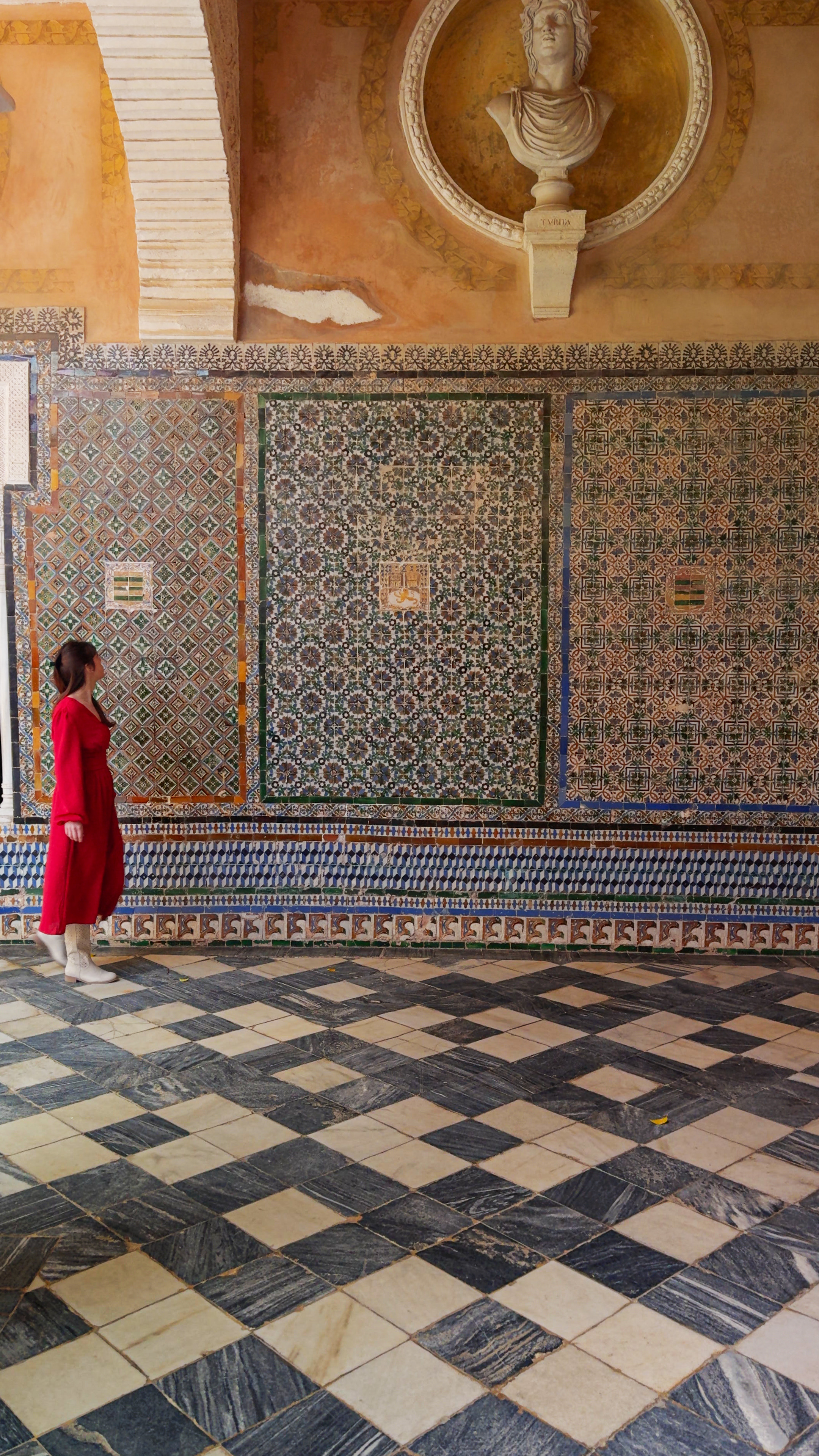
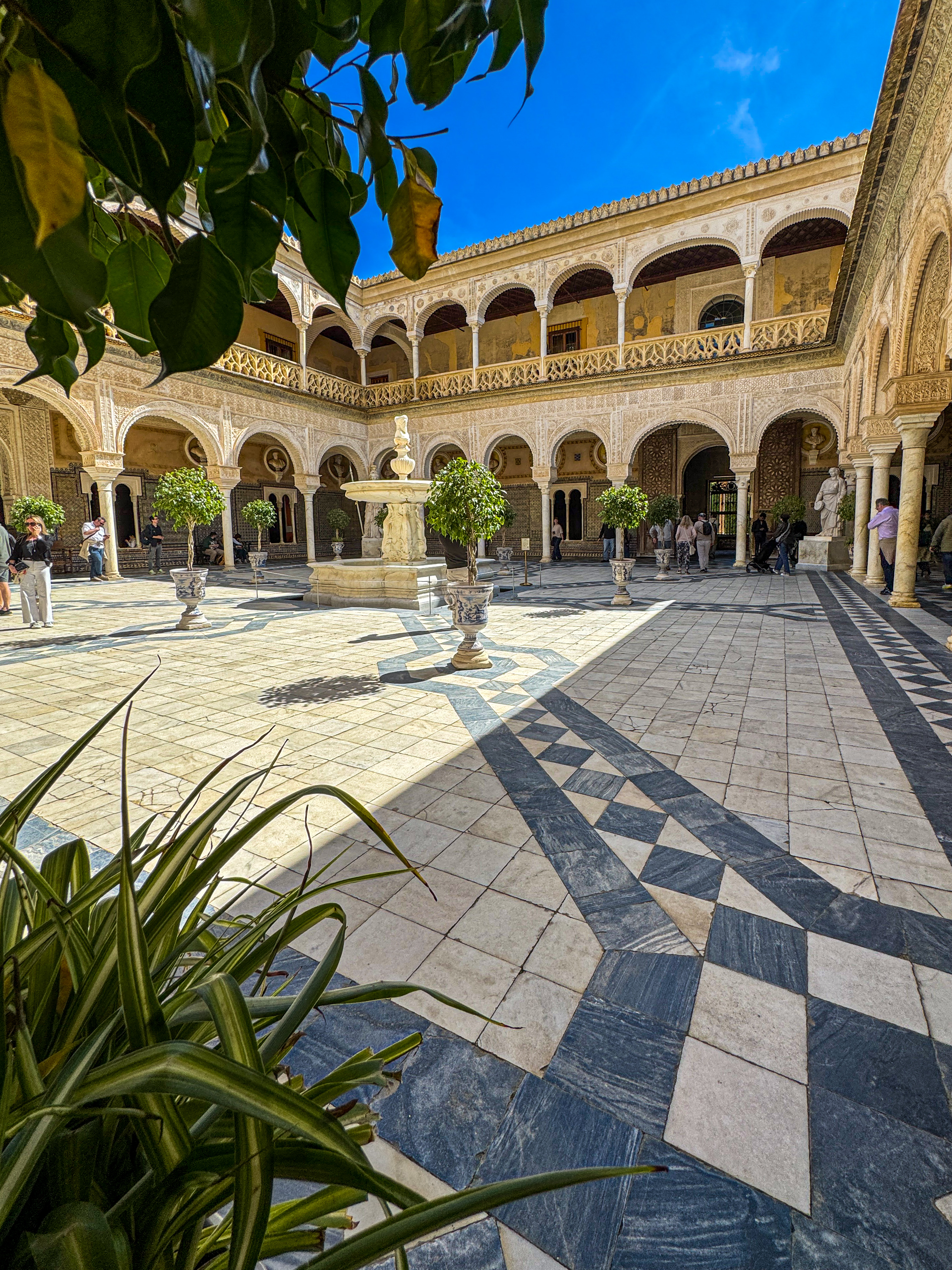
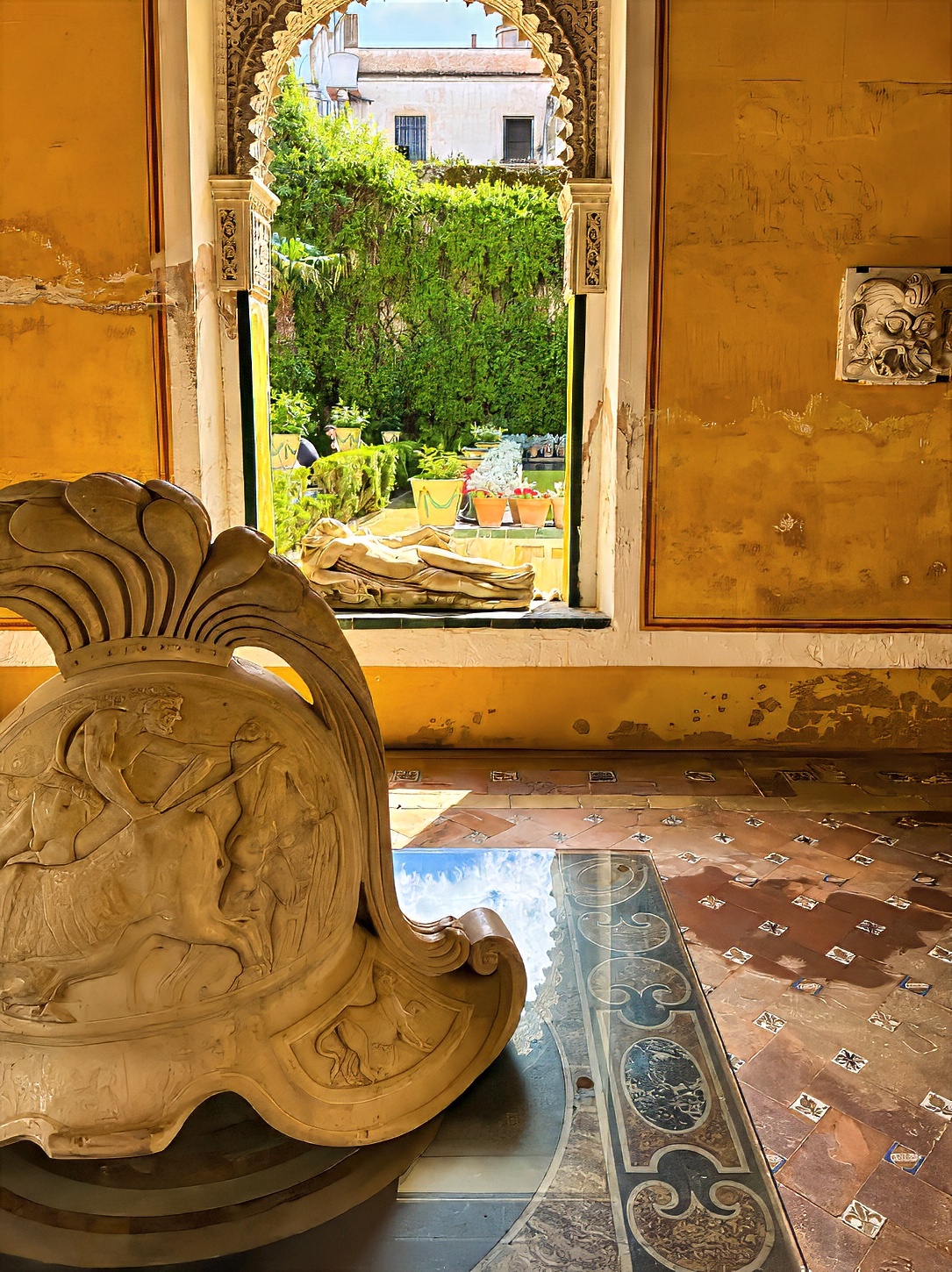
A private palace of the Dukes of Medinaceli, and the largest noble residence in the old centre. Its main courtyard mixes Mudéjar plasterwork, Renaissance arcades and walls of sixteenth-century tiles, with gardens opening off either side.
The ground floor can be visited on its own; the upper floor is a separate ticket, visited in accompanied groups.
- Allow 1–1.5 hours
- Best morning, when the patios are cool and quiet
- Book not usually essential; tickets are sold online and at the door
- Know the palace hosts private events, so later entries can be affected
- Official site Fundación Casa Ducal de Medinaceli ↗
- Map Google Maps ↗
Day 2Midday · flexible
El Salvador or the Setas
Choose one, depending on the day. The Church of El Salvador, the city's second church after the Cathedral, is included in the Cathedral ticket and has one of Seville's richest Baroque interiors.
A short walk north, the Setas de Sevilla — the timber canopy over Plaza de la Encarnación — offers a raised walkway over the rooftops, with Roman remains in the museum beneath.
- Allow 45 minutes to 1 hour for either
- Best El Salvador in the late morning; the Setas walkway later in the day
- Know El Salvador keeps its own opening times; check them with the Cathedral
- Map El Salvador ↗ · Setas ↗
Day 2Late afternoon & evening
Triana
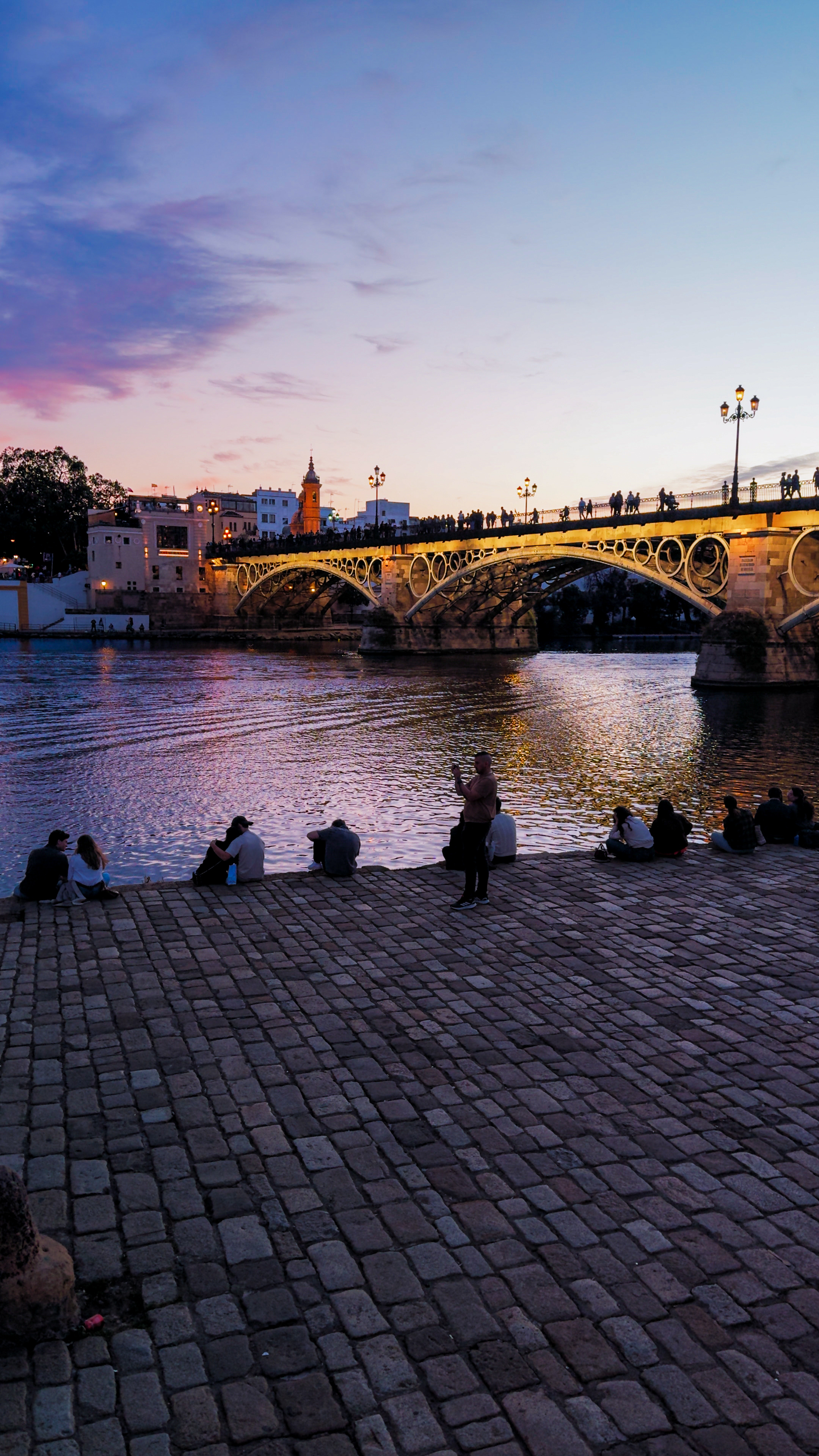
Cross the Puente de Isabel II — the Triana bridge — to the neighbourhood that supplied Seville's tiles for centuries. At the foot of the bridge, the Mercado de Triana stands on the site of the former castle of San Jorge. Its food stalls trade mainly in the morning and close in the early afternoon, while the bars and eating counters inside stay open later — if the stalls are what interest you, come across before lunch instead. Beyond the market, ceramic workshops and tiled façades line Calle Alfarería and Calle San Jorge. Finish along Calle Betis, the riverfront facing the old city, for the evening walk and a late dinner.
- Allow 2–3 hours, into the evening
- Best from late afternoon for the riverfront; morning for the market stalls
- Know the market's food stalls close in the early afternoon; its bars stay open into the evening
- Map Mercado de Triana ↗ · Calle Betis ↗
Day three
María Luisa & the river
Parque de María Luisa·Plaza de España·Torre del Oro·Riverside walk
Day 3Morning
Parque de María Luisa
Seville's main park, landscaped for the Ibero-American Exposition of 1929: shaded avenues, fountains, tiled benches and pavilions left from the exhibition. In the warmer months it is the most comfortable place for a walk.
- Allow 1 hour
- Best morning, before it gets hot
- Know entry is free
- Map Google Maps ↗
Plaza de España
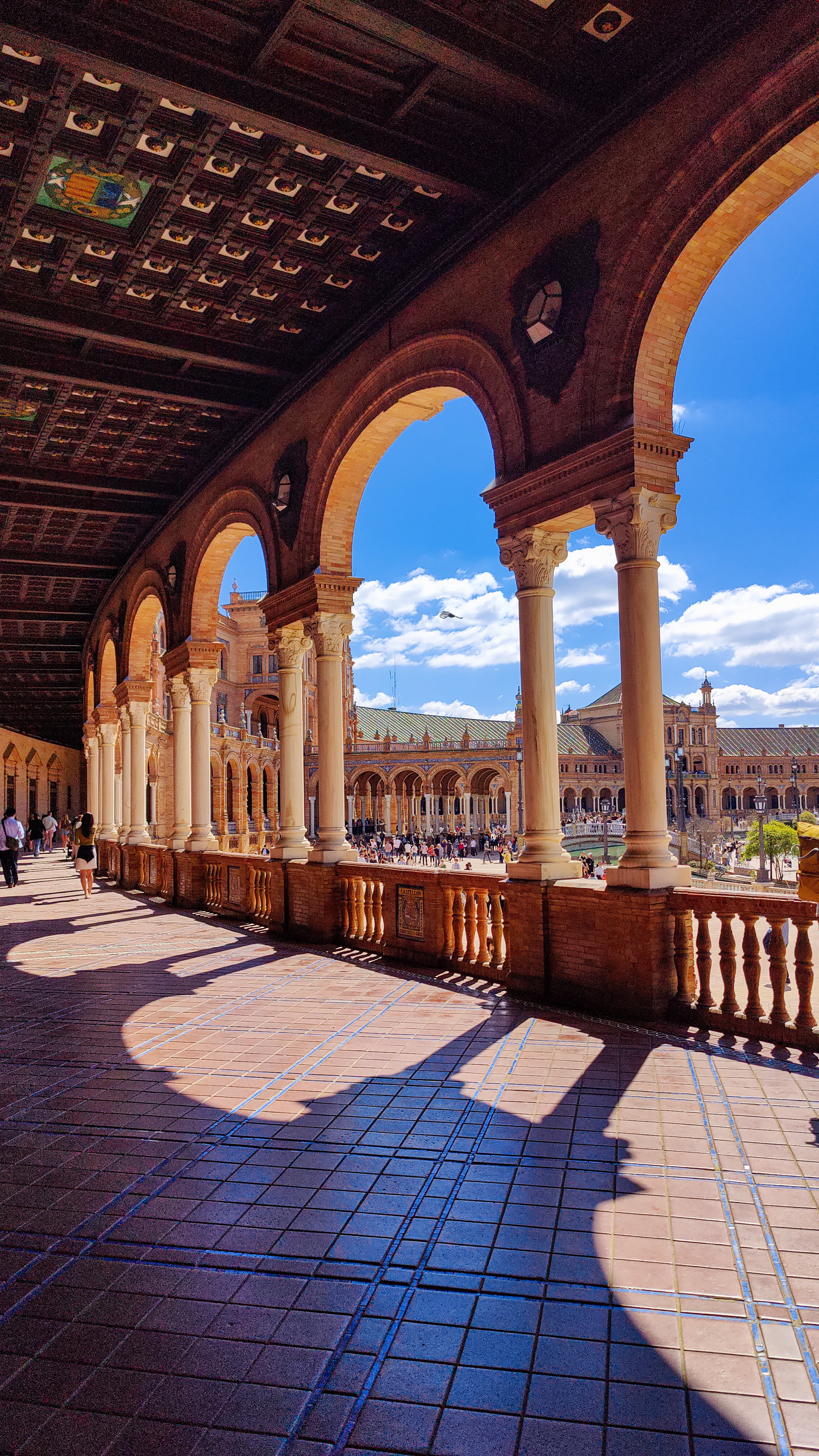
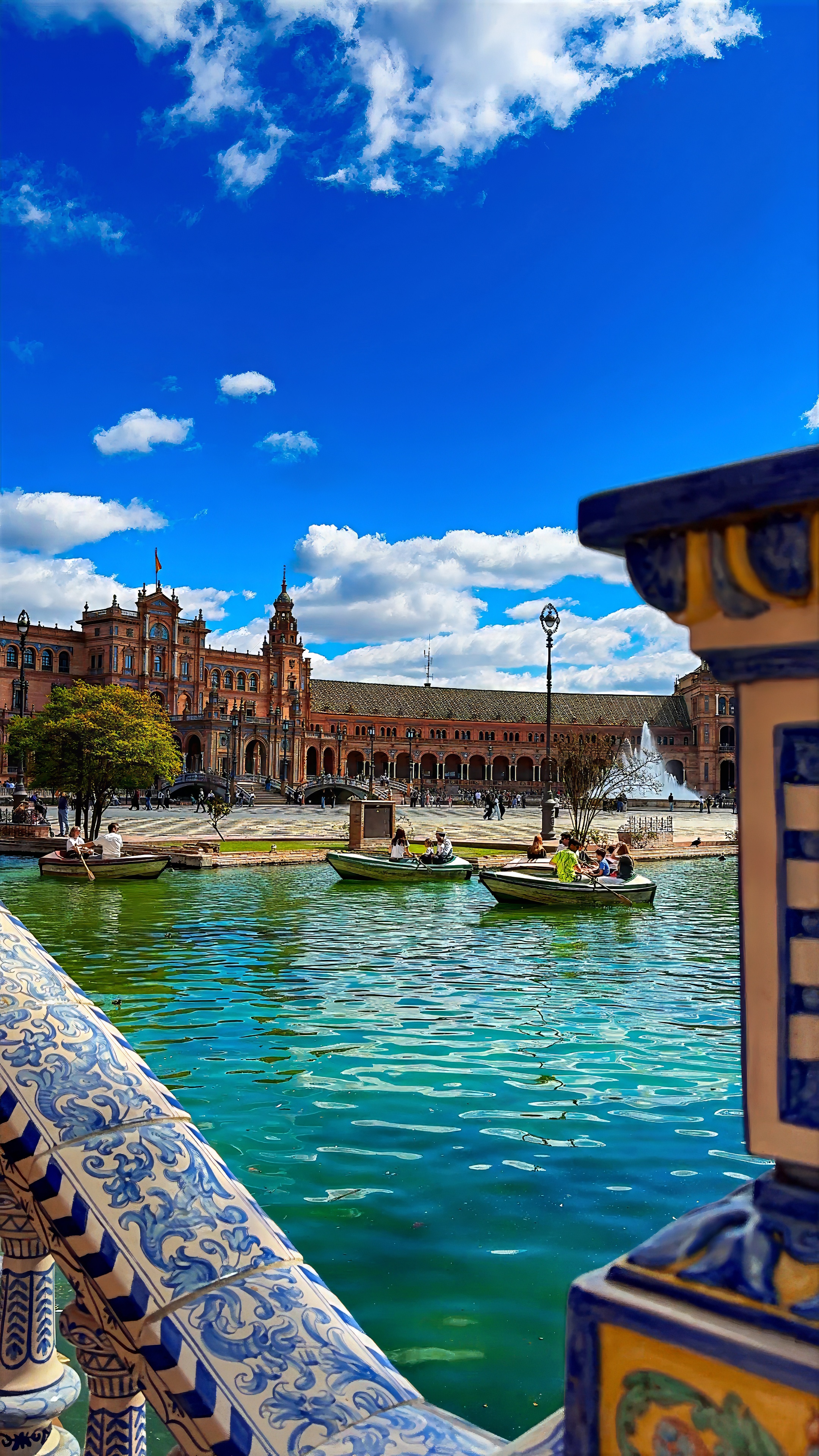
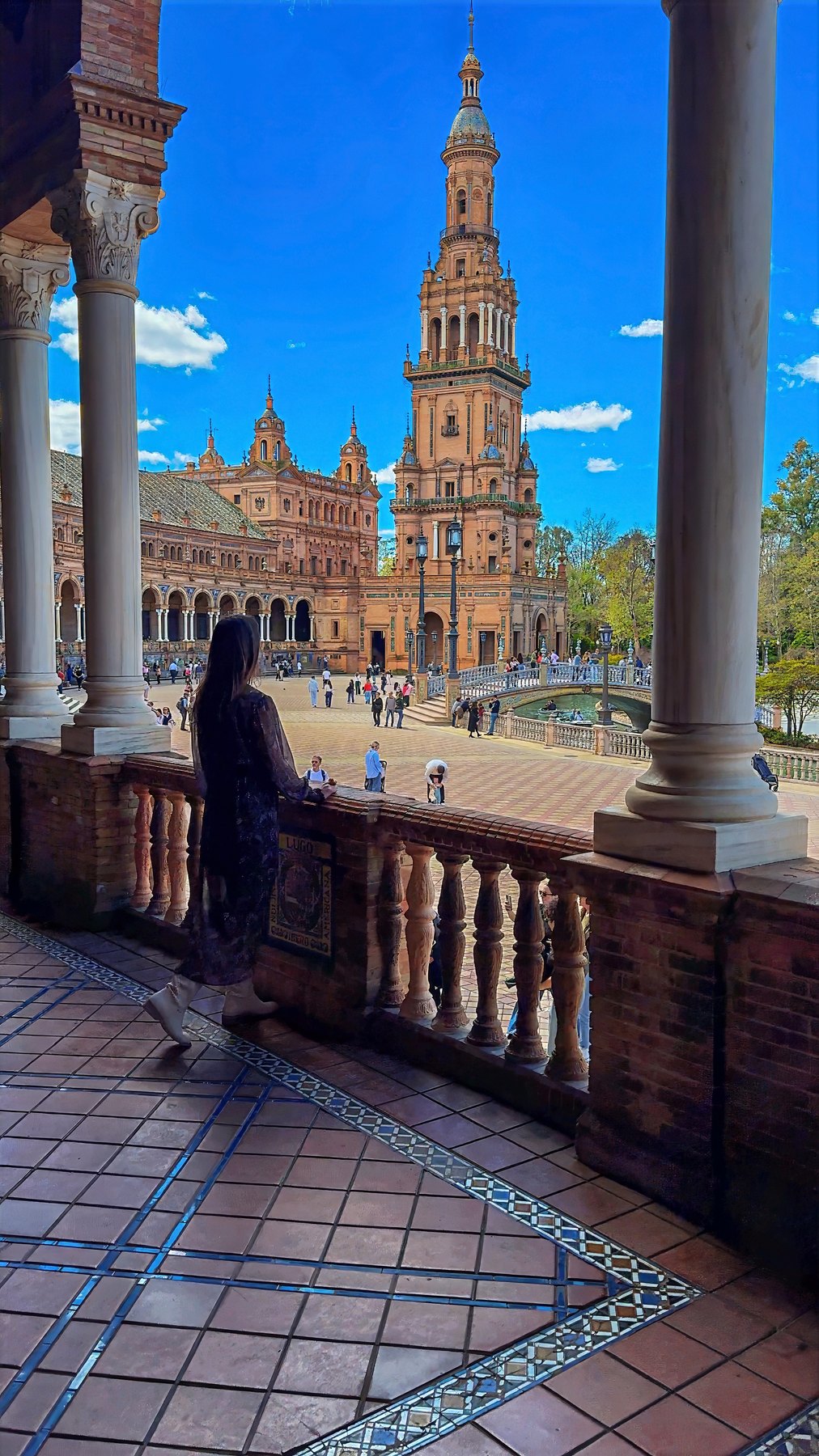
The largest of the 1929 exhibition buildings: a brick-and-tile semicircle around a canal, with bridges and a tiled alcove for each Spanish province along the base. Walk the upper gallery for the views across the square, then come down to the canal.
Small rowing boats are hired on the canal when the service is operating; check on the day.
- Allow 45 minutes to 1 hour
- Best morning, or late afternoon for softer light
- Know entry is free; the square is busy with visitors and street performers from late morning
- Map Google Maps ↗
Day 3Afternoon & evening
The Arenal & the river
Walk north through the Arenal, the old riverside district, to the Torre del Oro, the thirteenth-century watchtower on the Guadalquivir. From here the Paseo de Cristóbal Colón runs along the water past the Real Maestranza bullring towards the Triana bridge — a flat, easy walk to end the trip.
- Allow 1–2 hours
- Best early evening
- Know the Torre del Oro houses a small naval museum with its own opening times
- Map Torre del Oro ↗
If you have another day
Itálica
The Roman city of Itálica
The remains of a Roman city founded in 206 BC, about 9 km from Seville in Santiponce. The amphitheatre is the main sight, alongside the streets and house mosaics of the later town. Allow half a day including the journey.
- Allow half a day
- Know opening days and hours change by season; check the official site before you set out
- Getting there metropolitan buses M-170A and M-170B from Plaza de Armas, stopping at Itálica CTAS timetables ↗, or a short drive on the N-630
- Official site Conjunto Arqueológico de Itálica ↗
- Map Google Maps ↗
Where to eat
Three tables worth booking
Abantal · €€€€
Chef Julio Fernández Quintero's tasting menus reinterpret Andalusian produce with contemporary technique. One Michelin star.
- Area east of the historic centre, near San Bernardo
- Best for the trip's special-occasion meal
- Book ahead
- Details Official site ↗ · Michelin Guide, Seville ↗
Cañabota · €€€
Fish and seafood from Andalusia's Atlantic coast, displayed at a fishmonger's-style counter and grilled in an open kitchen; the menu changes daily with the market. One Michelin star.
- Area old centre, beside the Capilla de San Andrés
- Best for a seafood lunch on Day 2
- Book in advance
- Details Michelin Guide ↗
Sobretablas · €€
Chef Camila Ferraro's modern cooking draws clearly on regional and traditional dishes, with plates for sharing, a tasting menu and a wine list strong on Andalusian fortified wines.
- Area El Porvenir, a short walk from the Parque de María Luisa
- Best for lunch or dinner on Day 3
- Book recommended
- Details Michelin Guide ↗
Where to stay
Luxury addresses
Hotel Alfonso XIII
Commissioned by King Alfonso XIII to host guests of the 1929 Ibero-American Exposition, with Moorish detailing throughout and an outdoor pool. Part of The Luxury Collection.
- Area Calle San Fernando, beside the Real Alcázar
- Best for a landmark stay within walking distance of everything on Day 1
- Details Official site ↗
Mercer Sevilla
A small boutique hotel in the Casa Palacio Castelar, a late-nineteenth-century mansion, with an intimate restaurant and a terrace. It holds a MICHELIN Key.
- Area El Arenal, near Plaza Nueva and the Real Maestranza
- Best for an intimate stay between the Cathedral and the river
- Details Official site ↗
Palacio de Villapanés
A Baroque house-palace built in 1729 around a main courtyard, with 50 rooms, a wellness area and a rooftop terrace with a small pool.
- Area Calle Santiago, a few minutes from Santa Cruz and Casa de Pilatos
- Best for a quieter historic base close to Day 2
- Details Official site ↗
Practical
Before you go
From the airport TUSSAM's EA line (Especial Aeropuerto) runs to the centre, stopping at Santa Justa station, San Bernardo, Prado de San Sebastián and Plaza de Armas. On the EA bus you can pay the fare on board with a bank card. TUSSAM ↗ · Aena ↗
Heat in summer, see interiors in the morning, rest in the middle of the day and go out again from early evening. Carry water and sun protection.
Busy periods Semana Santa and the April Fair (Feria de Abril) bring very high demand for hotels and restaurants, and some streets close for processions. Dates change each year; check them before booking.
Tickets buy the Alcázar and the Cathedral only on their official sites. Opening hours change by season.
Dress the Cathedral and El Salvador require covered shoulders and rule out sleeveless tops and very short shorts or skirts; dress similarly for other churches.
Eating times lunch is usually from around 2pm and dinner from 9pm; many kitchens close between services.
Seville works best with the monuments booked early, the middle of the day kept for shade, and the evenings left for the river and Triana.
Feels like home.
Nearby, and next